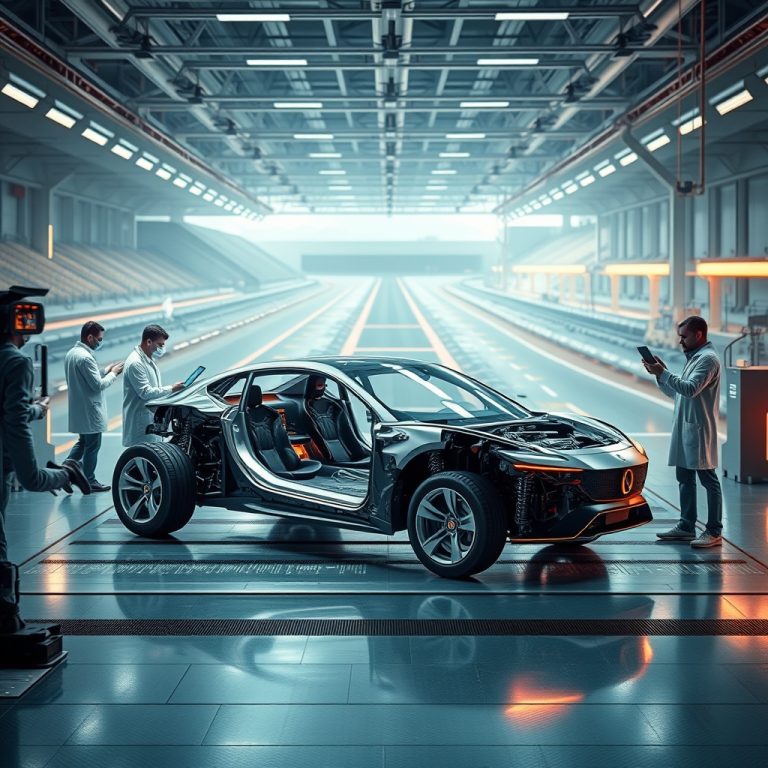
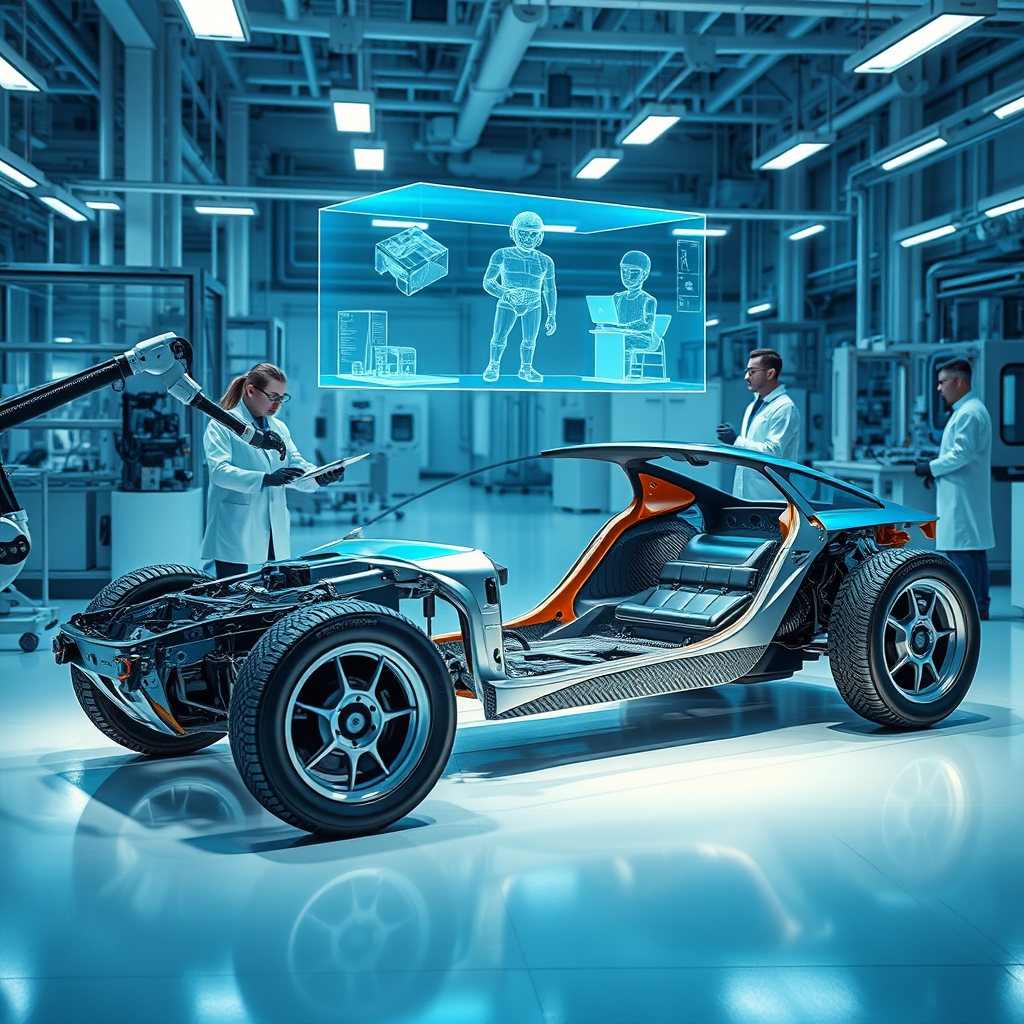
The automotive industry has always been a battleground for innovation, where every gram saved and every watt conserved can translate into tangible performance gains. Among the most transformative advancements in recent decades is the relentless pursuit of lightweighting—a strategy that goes far beyond mere weight reduction. It’s a holistic reimagining of vehicle design, materials science, and engineering precision, all converging to create cars that are faster, more efficient, and kinder to the planet. Yet, despite its profound impact, lightweighting remains one of the least celebrated revolutions in modern automotive history.
The Science Behind the Scale
At its core, lightweighting is about optimizing mass without compromising strength, safety, or durability. The physics is simple: a lighter vehicle requires less energy to accelerate, brake, and maneuver, which directly translates into improved fuel efficiency, reduced emissions, and enhanced performance. For internal combustion engines, this means better miles per gallon; for electric vehicles (EVs), it extends range and reduces battery demands. But the benefits don’t stop there. A lighter car can achieve higher speeds with the same power output, sharper handling due to reduced inertia, and even lower tire wear, thanks to diminished stress on suspension components.
The challenge, however, lies in achieving these gains without sacrificing structural integrity. This is where advanced materials come into play. High-strength steel, aluminum alloys, carbon fiber, and even magnesium are now staples in automotive manufacturing, each offering unique advantages. High-strength steel, for instance, provides exceptional crash protection while allowing for thinner, lighter components. Aluminum, with its excellent strength-to-weight ratio, is a favorite for body panels and engine blocks. Carbon fiber, though expensive, is unmatched in stiffness and weight savings, making it a go-to for high-performance and luxury vehicles.
The Role of Computational Design
Lightweighting isn’t just about swapping heavy materials for lighter ones—it’s about rethinking design from the ground up. Computational tools like finite element analysis (FEA) and topology optimization have revolutionized the way engineers approach vehicle architecture. These technologies allow designers to simulate stress points, load distributions, and crash scenarios, enabling them to remove material where it’s not needed and reinforce areas that require strength. The result is a vehicle that’s not only lighter but also more efficient in its use of materials, reducing waste and cost.
Take, for example, the BMW i3, a pioneer in lightweight electric vehicles. Its LifeDrive architecture separates the passenger cell (made of carbon fiber-reinforced plastic) from the aluminum chassis, creating a structure that’s both rigid and lightweight. This innovative design didn’t just shave pounds off the vehicle—it redefined what an EV could be, offering a blend of sustainability, performance, and safety that was previously unattainable.
The Sustainability Equation
In an era where sustainability is no longer optional, lightweighting has emerged as a critical tool in the automotive industry’s green transition. Lighter vehicles consume less fuel, which means lower CO2 emissions over their lifespan. For EVs, reduced weight translates into smaller, less resource-intensive batteries, further shrinking their environmental footprint. Moreover, many lightweight materials, such as aluminum and carbon fiber, are increasingly being sourced from recycled content, closing the loop on sustainability.
But the sustainability benefits extend beyond the vehicle itself. Lighter cars require less energy to manufacture, transport, and even recycle at the end of their life. This holistic approach to sustainability is why automakers like Tesla, Ford, and Volkswagen are investing heavily in lightweighting technologies. For instance, Ford’s F-150 Lightning, an all-electric pickup truck, uses a mix of high-strength steel and aluminum to achieve a balance of durability and efficiency, proving that even large, heavy-duty vehicles can benefit from lightweighting.
The Performance Paradox
While efficiency and sustainability are compelling reasons to embrace lightweighting, the performance benefits are equally transformative. In motorsports, where every millisecond counts, lightweighting has long been a secret weapon. Formula 1 cars, for example, use advanced composites and honeycomb structures to achieve mind-bending speeds while maintaining structural integrity. These same principles are now trickling down to consumer vehicles, where lightweighting is enhancing everything from acceleration to cornering dynamics.
Consider the McLaren 720S, a supercar that leverages a carbon fiber monocoque chassis to achieve a dry weight of just 3,153 pounds. This lightweight construction, combined with a twin-turbocharged V8 engine, allows the 720S to sprint from 0 to 60 mph in just 2.8 seconds—a feat that would be impossible with a heavier, traditional steel chassis. Even in more modest vehicles, lightweighting is making a difference. The Mazda MX-5 Miata, for instance, has long been celebrated for its nimble handling, a trait owed in large part to its lightweight design philosophy.
The Road Ahead: Challenges and Opportunities
Despite its many advantages, lightweighting is not without its challenges. Cost remains a significant barrier, particularly for materials like carbon fiber, which can be prohibitively expensive for mass-market vehicles. Manufacturing processes for advanced materials are also more complex, requiring specialized equipment and expertise. Additionally, there’s the issue of recyclability—while aluminum and steel are easily recycled, carbon fiber presents more challenges due to its composite nature.
However, the future of lightweighting is bright. Advances in material science, such as the development of new alloys and bio-based composites, are making lightweight materials more accessible and sustainable. Meanwhile, innovations in additive manufacturing (3D printing) are enabling more efficient production methods, reducing waste and cost. As these technologies mature, lightweighting will become a standard practice across the automotive industry, from economy cars to luxury SUVs.
The journey toward lighter, more efficient vehicles is far from over, but the progress made so far is a testament to human ingenuity. As automakers continue to push the boundaries of what’s possible, lightweighting will remain a cornerstone of automotive innovation, quietly reshaping the way we drive, the cars we build, and the world we leave behind. The road ahead is lighter, faster, and greener—and that’s a revolution worth celebrating, even if it happens behind the scenes.
About the Author