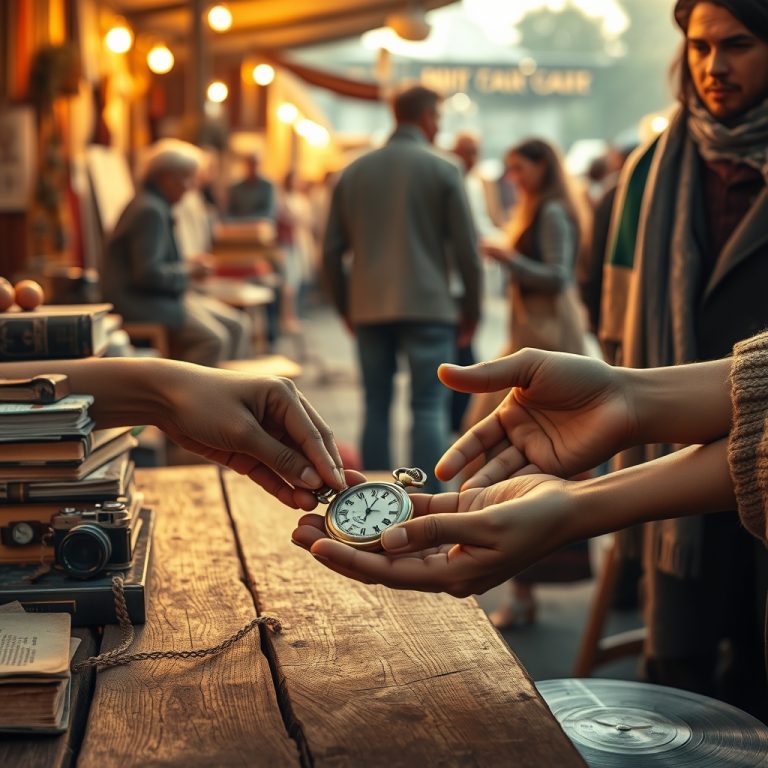

There is a quiet magic in the moment you decide to part with something you once cherished. The weight of memory lingers in the fibers of a sweater, the scratches on a vinyl record, or the faded pages of a book—each object carrying its own silent narrative. When you choose to sell and trade-in, you’re not just exchanging goods for currency; you’re engaging in a dialogue with the past, present, and future. What begins as a transaction often unfolds into something far more profound: a reckoning with value, attachment, and the art of renewal.
The Alchemy of Letting Go: Why Sell and Trade-In Feel Like Liberation
We live in a world that equates possession with permanence, where the idea of holding onto things forever is often romanticized. Yet, there’s a quiet rebellion in choosing to release what no longer serves you. The decision to sell and trade-in isn’t just about decluttering—it’s an act of reclaiming agency over your space, your time, and even your identity. What once felt like a necessity may now feel like a burden, and in that realization lies the first step toward transformation.
Consider the way a musician trades in an old guitar. The instrument may have been their companion through years of practice, performances, and late-night melodies. But as their skill evolves, so too does their need for something that resonates differently. The act of trading in isn’t a dismissal of the past; it’s an acknowledgment that growth sometimes requires leaving things behind. The same applies to furniture, electronics, or even clothing—each item holds a chapter of your life, and letting go can feel like turning the page.
The Unseen Economy of Stories: How Sell and Trade-In Preserve Legacies
Every object has a story, and when you sell and trade-in, you’re not just passing along an item—you’re passing along a piece of history. A vintage camera might have captured generations of family moments before finding its way into someone else’s hands. A well-loved novel could have been the solace of a stranger during a difficult time. These exchanges create a ripple effect, where the value of an item transcends its material worth and becomes part of a larger, unseen economy of meaning.
This is where the true beauty of trade-ins lies. Unlike traditional selling, where the focus is often on profit, trade-ins introduce an element of continuity. The item you relinquish doesn’t disappear into the void; it finds a new home, a new purpose, and perhaps even a new story. There’s comfort in knowing that the things you once loved will continue to be cherished, even if by someone else. It’s a form of legacy-building, one where the past and future intertwine in the most unexpected ways.
The Psychology of Value: Why We Struggle to Sell and Trade-In What We Own
If letting go were easy, thrift stores and online marketplaces wouldn’t be filled with items that have sat untouched for months. The hesitation to sell and trade-in often stems from a deep-seated fear of loss. Psychologists call this the endowment effect—the tendency to overvalue what we own simply because it belongs to us. A coffee mug you’ve used daily might not be particularly special, but the thought of parting with it can feel like losing a piece of yourself.
Yet, this attachment is also what makes the process so rewarding. When you finally decide to let go, you’re not just freeing up physical space; you’re making room for new experiences, new connections, and new versions of yourself. The key is to reframe the act of selling or trading in as an opportunity rather than a sacrifice. Instead of asking, “What am I losing?” try asking, “What am I making space for?” The answer might surprise you.
The Ritual of Renewal: How to Sell and Trade-In with Intention
There’s a difference between hastily clearing out a closet and engaging in a mindful sell and trade-in process. The latter transforms a mundane task into a ritual of renewal. Start by holding each item in your hands and asking yourself: “Does this still align with who I am?” If the answer is no, it’s time to consider its next chapter. Take photographs of sentimental items before letting them go—this way, the memories remain even if the object doesn’t.
When it comes to trade-ins, research platforms that align with your values. Some companies specialize in sustainable reselling, ensuring your items are repurposed rather than discarded. Others focus on giving back, donating a portion of proceeds to causes you care about. The act of trading in becomes not just a transaction, but a statement about the kind of world you want to live in—a world where value is cyclical, not linear.
The Unexpected Gifts of Letting Go
The most surprising aspect of sell and trade-in isn’t the money you might earn or the space you’ll gain. It’s the way the process can shift your perspective. Suddenly, you see your belongings not as anchors, but as vessels—temporary companions on a journey. The things you once clung to become stepping stones, each one leading you closer to a version of yourself you haven’t yet met.
And perhaps that’s the greatest gift of all: the realization that nothing is truly yours to keep. Everything is borrowed, even the things we call our own. When you embrace this truth, the act of selling or trading in becomes less about loss and more about flow. You’re not just exchanging objects; you’re participating in the eternal dance of giving and receiving, of holding on and letting go. The next time you hesitate to part with something, ask yourself: “Who else might need this more than I do?” The answer might just set you both free.
About the Author