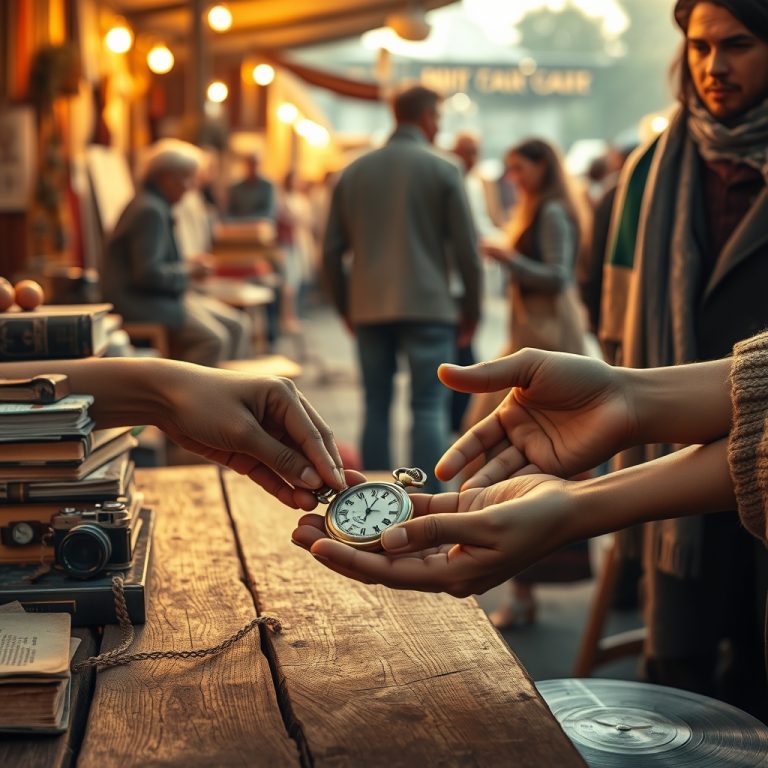

There is a quiet conversation happening every time we choose to sell and trade-in something we once cherished. It’s not just about the exchange of goods or the clink of coins—it’s about the unspoken stories embedded in the things we let go. What begins as a transaction often unfolds into a meditation on value, memory, and the art of moving forward. In a world that constantly urges us to acquire, the act of parting with possessions can feel like a small rebellion, a whisper of resistance against the tide of accumulation.
The Soul of Objects in the Sell and Trade-In Economy
Every item we own carries a fragment of our lives—a scent, a stain, a scratch that tells a story. When we decide to trade in a book, a guitar, or a piece of jewelry, we’re not just handing over an object; we’re passing along a piece of our history. The secondhand market thrives on these silent narratives, where buyers and sellers engage in a dance of interpretation. What was once a utilitarian purchase becomes, in the hands of another, a vessel for new dreams.
Consider the vintage camera you found at a flea market, its leather grip worn smooth by decades of use. The person who sold it may have captured their child’s first steps, a honeymoon in Paris, or a long-forgotten sunset. Now, it’s your turn to add to its story. This is the magic of the sell and trade-in cycle: it transforms objects into bridges between strangers, connecting past and present in ways that feel almost sacred.
Why We Hesitate Before the Trade-In Counter
For all its beauty, the decision to sell and trade-in is rarely easy. There’s a pang of guilt, a flicker of doubt—what if we regret it later? What if the item we’re letting go becomes irreplaceable? These hesitations reveal something deeper about our relationship with possessions. We don’t just own things; we invest them with meaning, turning them into extensions of ourselves. To part with them is to acknowledge that we, too, are changing.
Yet, this discomfort is also where the growth happens. The moment we hand over the keys to our old car or the vinyl records gathering dust in the attic, we’re making space—not just in our homes, but in our lives. The trade-in process becomes a metaphor for renewal, a way of saying, “I am ready for what comes next.” And in that readiness, there’s a quiet liberation.
The Alchemy of Value: Beyond Price Tags
In a culture obsessed with newness, the sell and trade-in market offers a radical alternative: value isn’t fixed. A laptop that’s outdated to one person might be a lifeline for another. A dress that no longer fits your style could become someone else’s treasure. The beauty of this system lies in its fluidity—what depreciates in one context can appreciate in another, not just in monetary terms, but in emotional and practical ones too.
This is why the best trade-in experiences feel less like transactions and more like collaborations. When you negotiate the price of a used bicycle or haggle over a collectible, you’re not just exchanging money for goods. You’re engaging in a negotiation of worth, where both parties walk away feeling like they’ve gained something meaningful. It’s a reminder that value is subjective, and that’s what makes the sell and trade-in economy so human.
When the Past Meets the Future at the Trade-In Desk
There’s a moment, standing at the trade-in counter, where time seems to fold in on itself. The person behind the desk appraises your item with a practiced eye, weighing its history against its potential. In that brief exchange, the past and future collide. The object you’re letting go will soon belong to someone else, and its next chapter begins with you.
This is the essence of the sell and trade-in ritual: it’s not an ending, but a transition. The guitar you played at open mic nights will find a new voice. The furniture that witnessed your late-night conversations will cradle someone else’s memories. And you? You’ll carry the lessons of this exchange forward, lighter in possession but richer in experience.
The Unwritten Rules of Letting Go
If you’re considering a trade-in or sale, there are a few unwritten rules to keep in mind. First, honor the object’s journey. Clean it, repair it if needed, and present it with the care it deserves. Second, be honest about its flaws—transparency builds trust, and trust is the foundation of any meaningful exchange. Finally, remember that the goal isn’t just to get the best price, but to find the right home for what you’re letting go.
These small acts of intention transform a simple sell and trade-in into something more profound. They turn a transaction into a story, a goodbye into a beginning. And in that space between letting go and moving forward, we discover that renewal isn’t just about what we gain—it’s about what we’re willing to release.
The next time you stand at the crossroads of a trade-in, listen closely. The objects you’re parting with have something to say, not just about where they’ve been, but about where you’re going. And in that silence, you might just hear the echo of your own next chapter waiting to be written.
About the Author