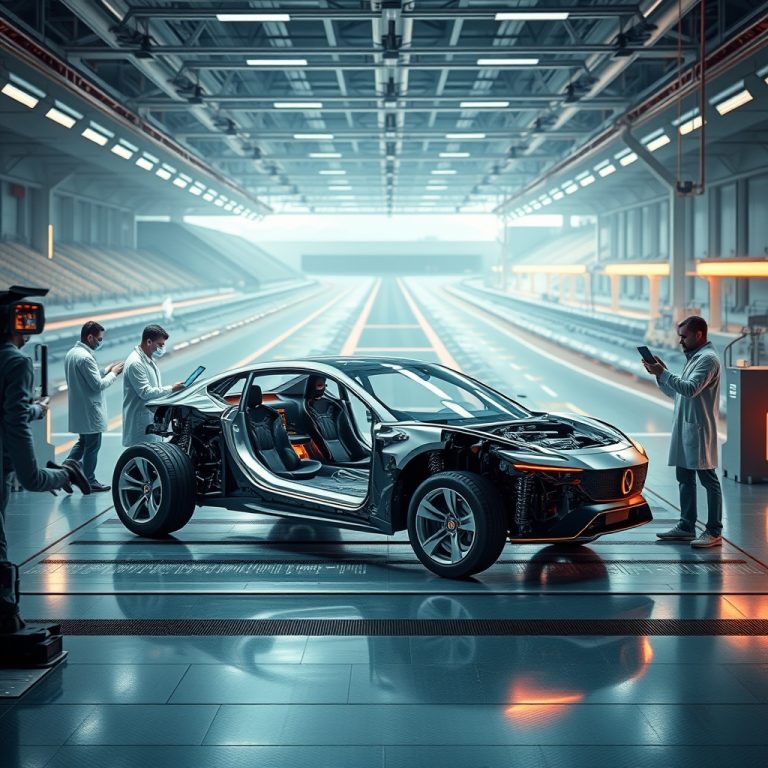

The automotive industry has long been a beacon of innovation, constantly pushing the boundaries of what is possible on four wheels. Yet, among the most transformative advancements in recent years, few have had as profound an impact on everyday driving as Advanced Driver-Assistance Systems (ADAS). These technologies, once considered luxuries, are now becoming standard features in vehicles across the globe, fundamentally altering how we perceive safety, control, and even the act of driving itself.
The Evolution of Safety: From Seatbelts to Sensors
Safety in automobiles has evolved dramatically since the introduction of the first seatbelt in the 1950s. What began as simple mechanical interventions has now blossomed into a sophisticated network of sensors, cameras, and artificial intelligence. ADAS represents the culmination of decades of research and development, designed to mitigate human error—the leading cause of road accidents. By leveraging real-time data and predictive algorithms, these systems act as an ever-vigilant co-pilot, ready to intervene when necessary.
Modern ADAS encompasses a wide range of features, each serving a unique purpose. Adaptive Cruise Control (ACC) adjusts a vehicle’s speed to maintain a safe distance from the car ahead, while Lane Keeping Assist (LKA) gently corrects steering to prevent unintentional lane departures. More advanced systems, such as Automatic Emergency Braking (AEB), can detect imminent collisions and apply the brakes if the driver fails to react in time. These technologies don’t just enhance safety; they redefine the relationship between driver and machine, fostering a sense of trust that was unimaginable just a generation ago.
Behind the Scenes: The Technology Powering ADAS
At the heart of ADAS lies a complex interplay of hardware and software. High-resolution cameras, radar sensors, and LiDAR (Light Detection and Ranging) work in tandem to create a 360-degree awareness of the vehicle’s surroundings. These sensors feed data into powerful onboard computers, which process information in milliseconds to make split-second decisions. For instance, a radar sensor might detect a pedestrian stepping into the road, while a camera identifies the traffic light’s color. The system then calculates the optimal response—whether to alert the driver, apply the brakes, or even steer the vehicle away from danger.
Machine learning plays a pivotal role in the effectiveness of ADAS. As these systems are exposed to more real-world driving scenarios, they continuously refine their algorithms, improving their ability to predict and respond to potential hazards. This adaptive learning ensures that ADAS becomes more reliable over time, adapting to diverse driving conditions, from congested urban streets to winding rural roads. The result is a dynamic safety net that evolves alongside the driver’s habits and the ever-changing environment.
The Human Factor: Balancing Automation and Control
While ADAS offers undeniable benefits, its integration into the driving experience raises important questions about the balance between automation and human control. Some drivers may feel a sense of over-reliance on these systems, leading to complacency behind the wheel. Others might experience frustration when the technology intervenes in situations where they believe they have full control. Striking the right balance is crucial; ADAS should be viewed as a tool to augment human driving skills, not replace them entirely.
Automakers are addressing these concerns by designing systems that are intuitive and customizable. Drivers can often adjust the sensitivity of features like lane-keeping or collision warnings to suit their preferences. Additionally, clear visual and auditory feedback ensures that the driver remains engaged and informed about the system’s actions. This transparency helps build confidence in ADAS, encouraging drivers to embrace these technologies as partners rather than intrusions.
The Road Ahead: ADAS and the Future of Mobility
The future of ADAS is closely intertwined with the broader trajectory of automotive innovation. As vehicles become more connected and autonomous, ADAS will serve as the foundation for higher levels of automation. Features that are currently optional, such as traffic jam assist or self-parking, will likely become standard, further reducing the cognitive load on drivers. Moreover, the integration of vehicle-to-everything (V2X) communication will enable cars to share real-time data with each other and infrastructure, creating a collaborative safety ecosystem that extends beyond individual vehicles.
Yet, the widespread adoption of ADAS also presents challenges. Cybersecurity concerns, for instance, must be addressed to prevent malicious actors from exploiting these systems. Additionally, regulatory frameworks will need to evolve to keep pace with technological advancements, ensuring that safety standards remain robust and consistent across different markets. As the industry navigates these complexities, one thing is clear: ADAS is not just a fleeting trend but a cornerstone of the future of driving.
The journey toward safer roads is an ongoing one, and ADAS represents a significant milestone in that journey. By blending cutting-edge technology with human intuition, these systems are not only preventing accidents but also reshaping our expectations of what it means to drive. As we look ahead, the fusion of innovation and safety will continue to drive the automotive industry forward, making every trip on the road a little more secure, a little more efficient, and a lot more confident.
About the Author