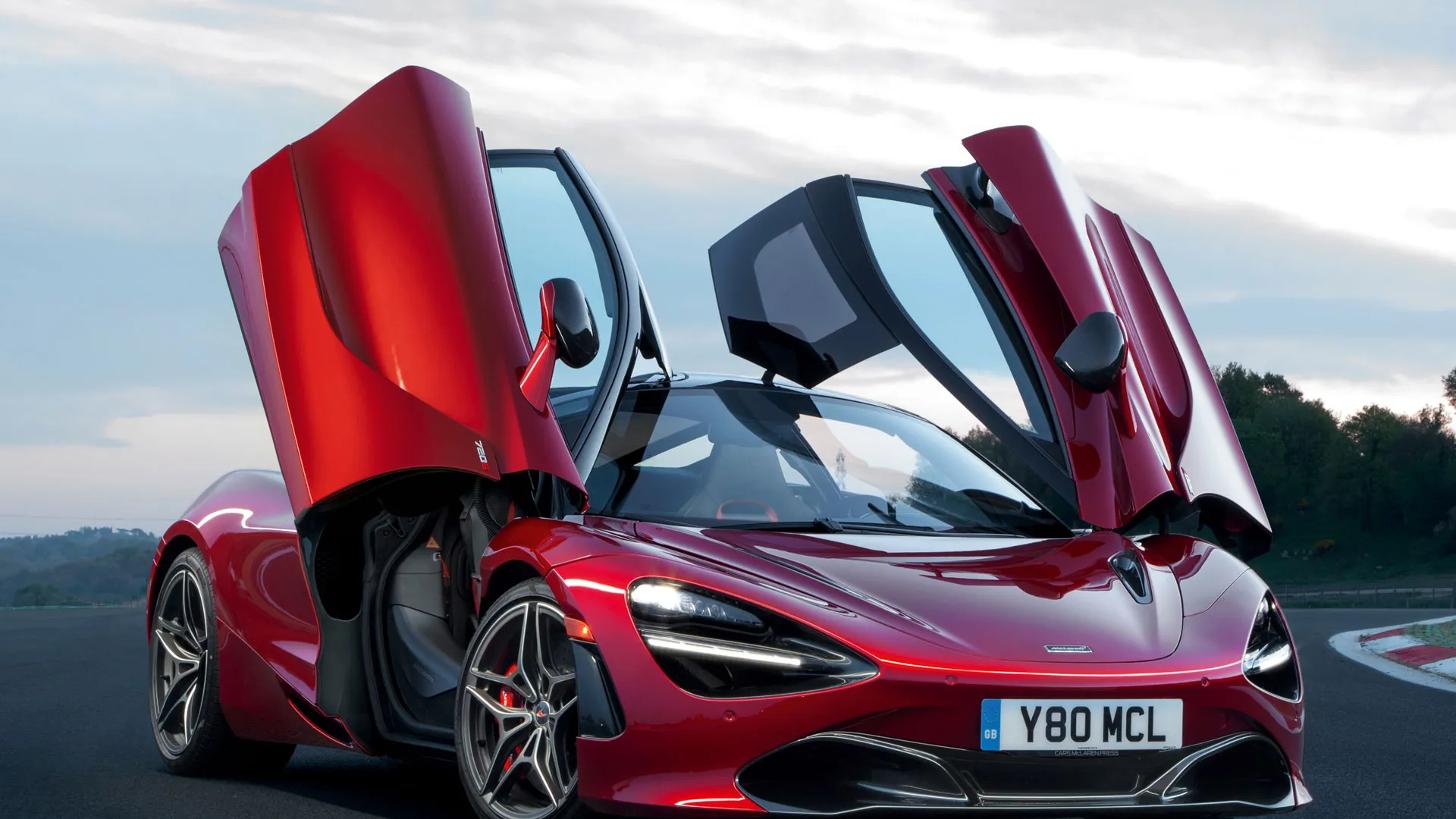
Few marques in the modern automotive firmament command the same reverence as McLaren. The name evokes wind tunnel precision, dihedral doors slicing through the air, and the unmistakable silhouette of a machine engineered without compromise. Yet the road-going success of McLaren was never inevitable. It was methodically constructed, engineered with the same forensic rigor that defines its supercars.
Understanding this evolution requires a close look at the McLaren Automotive company profile, its technological DNA, and the competitive ethos that permeates every carbon fiber filament it lays.
Origins Rooted in Relentless Competition
The story begins not on public roads but on the racetrack. Founded in 1963 by Bruce McLaren, the original enterprise was forged in the crucible of Formula 1. Racing was not merely a marketing instrument. It was the laboratory.
This competitive lineage shaped the organizational psyche. Engineering decisions were driven by data telemetry, not sentiment. Materials were chosen for tensile strength and mass efficiency, not cost convenience. When the brand eventually transitioned into road cars, it did not dilute its philosophy. It refined it.
The iconic McLaren F1 of the 1990s crystallized this ambition. With its central driving position and naturally aspirated V12, it was less a car and more a manifesto. Production was sparse. Impact was seismic.
The Birth of a Modern Automotive Powerhouse
McLaren Automotive, as it is known today, formally emerged in 2010 as a dedicated road car division. This structural bifurcation from the racing arm allowed for singular focus. It was not diversification for its own sake. It was strategic specialization.
An examination of the McLaren Automotive company profile reveals a vertically integrated manufacturer headquartered at the McLaren Technology Centre in Woking, England. The facility itself resembles a modernist sculpture, but beneath its curved glass lies a production ecosystem defined by efficiency and obsessive quality control.
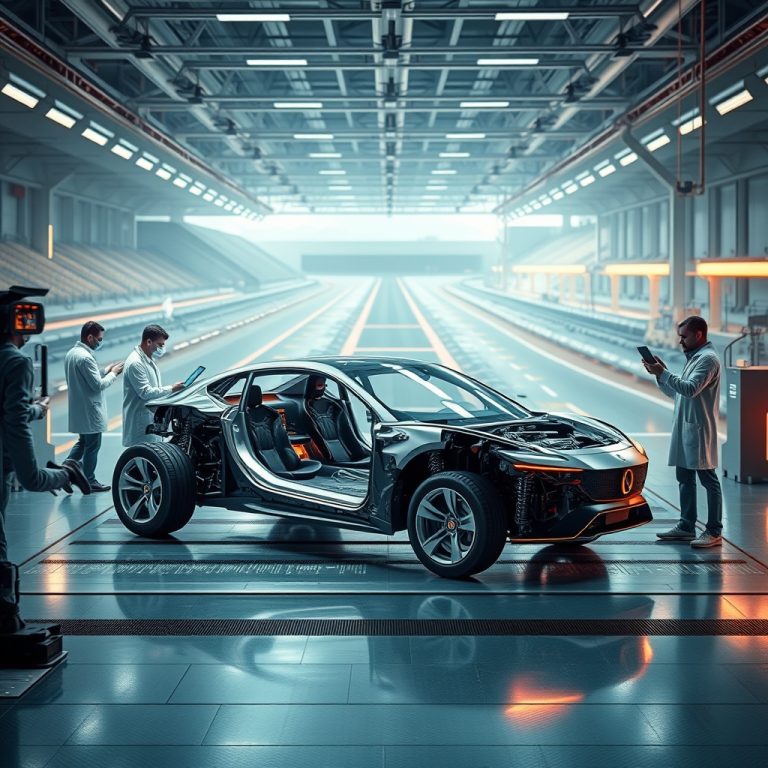
Unlike traditional automakers dependent on steel-intensive platforms, McLaren standardized carbon fiber monocoque architecture across its lineup. This decision was radical. Carbon fiber offers superior rigidity-to-weight ratios but demands high capital investment and intricate fabrication processes.
McLaren embraced the complexity.
Carbon Fiber as a Strategic Doctrine
The MonoCell and later MonoCage architectures form the structural backbone of nearly every McLaren road car. This is not a cosmetic choice. It is a strategic doctrine.
A lighter chassis enhances acceleration, braking, and cornering dynamics simultaneously. It reduces inertia and amplifies responsiveness. The engineering term is holistic performance optimization.
Competitors often retrofit performance onto heavier platforms. McLaren engineers performance from first principles.
The result is an almost telepathic steering feel. Minimal body roll. Surgical throttle response. Even at rest, a McLaren communicates tension, as though coiled for motion.
Design Philosophy Beyond Aesthetics
A McLaren is immediately identifiable, yet rarely ostentatious. Form follows airflow.
Designers and aerodynamicists collaborate in iterative loops, refining surfaces to manipulate laminar flow and downforce coefficients. Intakes are not ornamental. They are respiratory organs feeding mid-mounted twin-turbocharged V8 engines.
The cabin architecture reflects the same minimalism. Controls are purposeful. Interfaces are decluttered. Excess weight is the adversary.
Within the McLaren Automotive company profile, design is not categorized separately from engineering. It is integrated. That integration produces vehicles that appear sculptural yet functionally ruthless.
Product Strategy and Portfolio Architecture
McLaren structures its range into distinct series, each calibrated to a different performance threshold.
The GT line balances long-distance usability with formidable power. The Super Series intensifies the experience, delivering track-focused dynamics. The Ultimate Series transcends conventional categorization, producing limited-production hypercars that test the boundaries of mechanical possibility.
This tiered architecture serves both market segmentation and brand aspiration. It allows new entrants to experience McLaren ownership while preserving halo exclusivity at the upper echelons.
Strategic scarcity also plays a role. Production volumes remain deliberately constrained. Demand often exceeds supply. This equilibrium protects residual values and sustains desirability.
Powertrain Innovation and Engineering Precision
McLaren’s powertrains exemplify compact ferocity. The twin-turbocharged V8 engines are engineered for high specific output while maintaining reliability under extreme thermal loads.
Recent iterations incorporate hybrid augmentation, signaling a pragmatic embrace of electrification. Yet the objective remains constant: power density without superfluous mass.
Hybrid systems are integrated not as compliance mechanisms but as performance amplifiers. Instant electric torque mitigates turbo lag. Energy recuperation systems improve efficiency during deceleration.
The brand does not chase electrification trends indiscriminately. It integrates them with calculated intent.
Manufacturing Philosophy and Lean Production
The McLaren Production Centre operates with a cadence closer to aerospace assembly than mass automotive manufacturing. Each vehicle progresses through tightly orchestrated stations, many involving hand-crafted processes.
Robotic precision intersects with artisanal oversight. Carbon fiber tubs are cured in autoclaves. Paint finishes undergo multi-stage inspections under calibrated lighting environments. Tolerances are uncompromising.
An analytical reading of the McLaren Automotive company profile underscores this lean production ethos. The organization prioritizes agility over scale. Adaptability over volume.
Such an approach enables rapid iteration of models without the inertia that plagues larger conglomerates.
Customer Experience and Brand Stewardship
Ownership of a McLaren is positioned as an experiential continuum rather than a transactional endpoint. Track events, factory tours, and personalized commissioning programs reinforce emotional connection.
Customization is extensive. Exterior palettes extend beyond conventional hues. Interior materials range from Alcantara to bespoke carbon fiber finishes. Each vehicle can become an individualized expression of performance identity.
This experiential layering fortifies brand equity. It transforms customers into advocates.
Navigating Market Volatility and Industry Disruption
The supercar market is inherently cyclical. It is sensitive to macroeconomic fluctuations and evolving regulatory frameworks.
McLaren has faced its share of turbulence, including financial restructuring and global supply chain constraints. Yet resilience has been embedded into its operational strategy.
Diversified model offerings, strategic partnerships, and continued technological investment have allowed the brand to recalibrate without compromising its core philosophy.
Electrification mandates and emissions standards pose ongoing challenges. However, McLaren’s lightweight doctrine provides an intrinsic advantage. Reduced mass inherently improves efficiency metrics.
The Competitive Landscape
In the rarefied supercar segment, competitors are formidable. Italian exotica and German precision brands vie for dominance. Each leverages heritage and engineering prowess.
McLaren differentiates through technical purity. Where others may emphasize theatrics, McLaren emphasizes telemetry.
This distinction resonates with a subset of buyers who prioritize lap times over spectacle. It appeals to those who perceive a car not merely as a status artifact but as a dynamic instrument.
The brand’s racing heritage reinforces credibility. Victories in motorsport are not historical footnotes. They are ongoing validations.
Cultural Impact and Symbolism
Beyond performance statistics, McLaren occupies a symbolic niche. It represents British engineering audacity and intellectual rigor.
Its vehicles appear in cinematic productions and elite automotive gatherings, yet they retain an undercurrent of restraint. They are not flamboyant in the traditional sense. They are precise.
Precision, in this context, becomes aspirational.
The McLaren Automotive company profile encapsulates more than corporate structure. It embodies a philosophy anchored in calculated risk, advanced materials science, and competitive obsession.
The Road Ahead
The trajectory forward is complex. Full electrification looms across the industry horizon. Autonomous technologies threaten to redefine driver engagement.
For a brand whose identity is intertwined with tactile feedback and mechanical intimacy, the transition must be navigated delicately.
Yet history suggests adaptability. From race circuits to public roads, from naturally aspirated engines to hybrid architectures, McLaren has evolved without capitulating.
Future models will likely integrate higher degrees of electrification, possibly fully electric platforms. The challenge will be preserving the visceral immediacy that defines the marque.
If past performance is any indicator, engineering ingenuity will again be the solution.
McLaren Automotive stands as a testament to focused ambition. It did not expand haphazardly. It did not dilute its racing ethos for volume-driven growth. Instead, it codified its principles into a coherent production philosophy.
Carbon fiber monocoques. Aerodynamic efficiency. Lean manufacturing. Strategic scarcity. These are not marketing slogans but operational realities.
At its core, the legend persists because of discipline. Because of precision. Because every decision, from chassis construction to customer experience, aligns with a singular objective: uncompromised performance.
Inside this supercar legend lies not mythology, but meticulous engineering.
About the Author