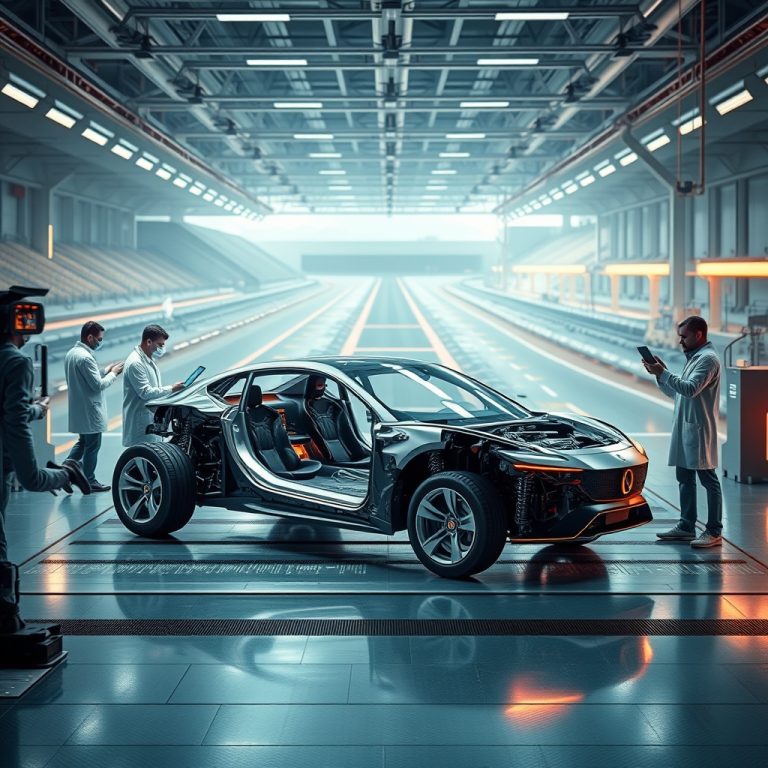

Modern vehicle manufacturing is a symphony of synchronized motion, calibrated force, and algorithmic precision. At its nucleus lies automotive assembly line equipment, the integrated machinery ecosystem that transforms raw components into fully realized automobiles. Without it, scale collapses. With it, throughput accelerates, defects diminish, and profitability stabilizes.
The contemporary assembly plant is not merely a factory floor. It is a cyber-physical organism engineered for velocity, repeatability, and resilience.
The Structural Backbone: Conveyor Systems
No assembly line can function without controlled movement. Conveyor systems form the vascular network of the plant, transporting chassis, subassemblies, and finished vehicles between workstations with deterministic timing.
Skid conveyors, power-and-free systems, and overhead monorails each serve specialized roles. Skid systems offer stability for heavy vehicle bodies. Overhead conveyors maximize floor utilization. Power-and-free configurations enable selective routing, facilitating flexible production schedules.
Advanced sensors embedded within these conveyors provide real-time positional data. This telemetry ensures synchronization with robotic stations downstream. Even millisecond deviations are corrected automatically. Precision is mandatory.
In modern facilities, conveyors are no longer passive transport mechanisms. They are intelligent nodes within the broader automotive assembly line equipment framework.
Robotic Workstations: Precision at Scale
Industrial robotics have redefined assembly line dynamics. Multi-axis robotic arms execute welds, apply adhesives, install windshields, and position drivetrain components with sub-millimeter accuracy.
These robots are equipped with force-torque sensors and machine vision systems. The result is adaptive operation. If a component deviates from nominal positioning, correction occurs instantly. Human reflexes cannot rival this level of responsiveness.
Collaborative robots, or cobots, further enhance versatility. Designed to operate safely alongside human technicians, they handle repetitive or ergonomically taxing tasks. This hybrid labor model amplifies productivity while mitigating workplace injuries.
Within the architecture of automotive assembly line equipment, robotics function as both executors and quality gatekeepers.
Automated Welding Systems
Body-in-white construction demands uncompromising structural integrity. Robotic spot welding systems deliver thousands of welds per vehicle with repeatable consistency. Laser welding technologies extend this capability, enabling high-strength seams with minimal thermal distortion.
Advanced welding cells integrate inline inspection tools such as ultrasonic and vision-based analyzers. These systems detect microfractures and incomplete joints before vehicles progress to subsequent stations.
The economic implication is profound. Early defect detection reduces rework costs and protects brand reputation.
Material Handling and AGVs
Automated Guided Vehicles, or AGVs, orchestrate the movement of components across expansive facilities. Guided by LiDAR and magnetic pathways, they transport engines, transmissions, and battery modules to designated assembly zones.
Unlike fixed conveyors, AGVs offer dynamic routing. Production lines can be reconfigured without extensive infrastructural overhaul. This flexibility is invaluable in an era characterized by frequent model updates and electrification transitions.
Material handling subsystems represent a critical subset of automotive assembly line equipment, bridging logistics and production seamlessly.
Torque Tools and Fastening Systems
Precision fastening is an underappreciated discipline. Every bolt must be torqued to exact specifications. Under-tightening compromises safety. Over-tightening induces stress fractures.
Modern fastening systems incorporate transducerized torque tools that measure angle and tension in real time. Data is logged for traceability, creating a digital audit trail for each vehicle.
This data-driven fastening paradigm enhances compliance with regulatory standards and internal quality metrics.
Paint Shop Technologies
The paint shop is often the most capital-intensive segment of a plant. It is also one of the most technologically intricate.
Electrocoating systems apply corrosion-resistant primers uniformly across metal surfaces. Robotic sprayers then administer base coats and clear coats within climate-controlled booths to eliminate particulate contamination.
Advanced filtration and solvent recovery systems reduce environmental impact. Energy-efficient curing ovens optimize thermal cycles, lowering operational costs.
Paint quality is not cosmetic alone. It is protective. And the equipment enabling it is foundational to the entire automotive assembly line equipment ecosystem.
Powertrain Assembly Modules
Engines, transmissions, and increasingly electric drive units require specialized assembly modules. These stations often operate within cleanroom-like environments to prevent particulate intrusion.
Automated piston insertion systems, crankshaft alignment rigs, and battery cell stacking machines exemplify this specialization. Each subassembly undergoes rigorous functional testing before integration into the vehicle chassis.
Electrification introduces additional complexities. High-voltage battery assembly demands insulated tooling, thermal management systems, and advanced safety interlocks.
The evolution of propulsion technology continuously reshapes the configuration of automotive assembly line equipment.
Quality Inspection and Vision Systems
Quality assurance is no longer relegated to final inspection checkpoints. It is embedded throughout the line.
High-resolution cameras inspect panel gaps, surface finishes, and component alignment. Machine learning algorithms compare captured images against idealized templates, identifying anomalies invisible to the human eye.
Dimensional verification systems employ laser scanners to ensure chassis geometry remains within micrometric tolerances. Functional testing rigs simulate real-world conditions, validating braking systems, steering calibration, and electronic diagnostics.
Quality is systemic. Equipment is the enabler.
Human-Machine Interface and Control Systems
Supervisory Control and Data Acquisition systems, or SCADA platforms, orchestrate the entire assembly ecosystem. They monitor temperature gradients, torque values, conveyor speeds, and robotic cycle times.
Operators interact with intuitive dashboards displaying key performance indicators in real time. Predictive maintenance algorithms flag potential equipment failures before downtime occurs.
This convergence of hardware and software epitomizes the modern conception of automotive assembly line equipment. It is not merely mechanical infrastructure; it is cybernetic architecture.
Ergonomic and Safety Systems
Human workers remain indispensable. Ergonomic lift assists, adjustable platforms, and exoskeletal supports reduce physical strain. Safety light curtains and pressure-sensitive mats prevent accidental collisions with robotic arms.
Emergency stop circuits are redundantly engineered. Fire suppression systems are strategically integrated within high-risk zones such as battery assembly areas.
Safety equipment may not generate headlines, but it preserves workforce continuity and regulatory compliance.
Modular Flexibility and Industry 4.0 Integration
Contemporary plants prioritize modularity. Production cells are designed to accommodate variant configurations without wholesale reengineering.
Industry 4.0 principles underpin this adaptability. IoT sensors embedded within machinery collect operational data continuously. Cloud-based analytics platforms synthesize this data into actionable insights.
Through digital twins—virtual replicas of physical production lines—engineers simulate process changes before implementation. This reduces risk and accelerates innovation cycles.
Such integration ensures that automotive assembly line equipment remains agile amid evolving consumer preferences and technological shifts.
Sustainability and Energy Optimization
Environmental stewardship is no longer optional. Energy-efficient motors, regenerative braking in conveyors, and closed-loop water recycling systems minimize ecological footprints.
Solar arrays and energy storage solutions increasingly supplement plant power demands. Waste heat recovery systems capture thermal energy from ovens and repurpose it for facility heating.
Sustainability considerations influence equipment selection at the procurement stage. Lifecycle cost analyses extend beyond purchase price to encompass energy consumption and maintenance requirements.
Strategic Investment and Competitive Advantage
Investment in advanced automotive assembly line equipment is capital intensive. However, the return on investment is measured in reduced defect rates, faster cycle times, and enhanced product consistency.
Plants equipped with state-of-the-art machinery can pivot quickly to new vehicle architectures, including electric and hybrid platforms. They can scale production efficiently while maintaining quality thresholds.
In a hypercompetitive global market, operational excellence is a differentiator. Equipment is the instrument through which that excellence is realized.
The modern automotive assembly plant is a complex, interdependent network of intelligent machinery, skilled labor, and digital oversight. Every conveyor belt, robotic arm, torque tool, and inspection camera contributes to a meticulously choreographed production ballet.
At the center of this ecosystem stands automotive assembly line equipment, the structural and technological foundation of vehicle manufacturing. It governs efficiency. It safeguards quality. It enables innovation.
As electrification accelerates and consumer expectations intensify, the sophistication of assembly line infrastructure will only increase. Plants that embrace advanced automation, data integration, and sustainable engineering will define the future of mobility manufacturing.
In this environment, equipment is not merely operational hardware. It is strategic capital.
About the Author