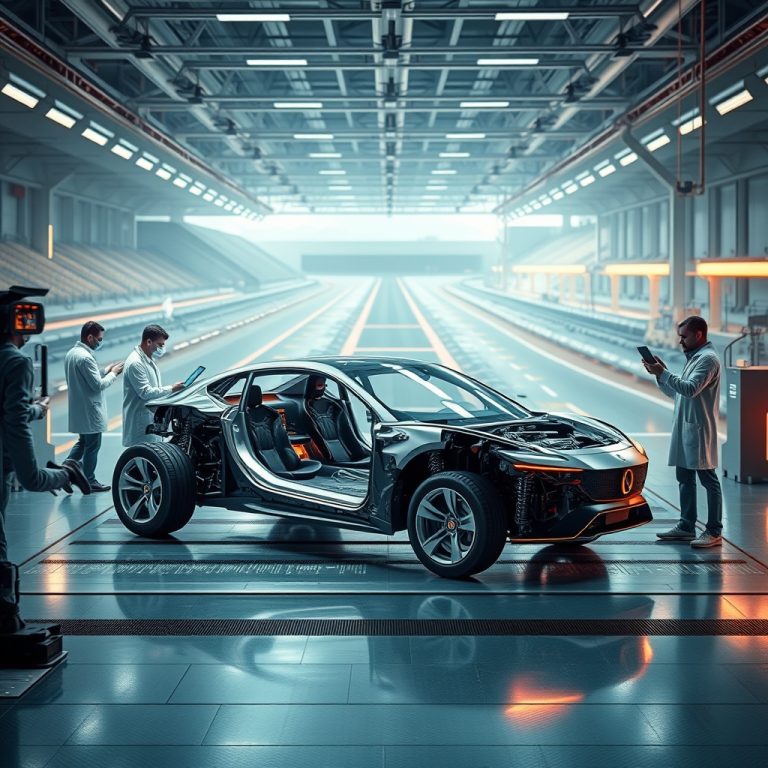

In an era where technology permeates every aspect of our lives, the automotive industry stands at the forefront of innovation, constantly pushing the boundaries of what vehicles can achieve. Among the most transformative advancements in recent years is predictive maintenance—a silent revolution that is redefining how we approach vehicle reliability, performance, and longevity. Unlike traditional maintenance schedules that rely on fixed intervals or reactive repairs, predictive maintenance leverages cutting-edge technology to anticipate issues before they arise, ensuring that cars remain in optimal condition with minimal downtime.
The Science Behind Predictive Maintenance
At its core, predictive maintenance is a data-driven approach that combines sensors, artificial intelligence (AI), and machine learning to monitor a vehicle’s health in real time. Modern cars are equipped with an array of sensors that track everything from engine temperature and oil quality to brake wear and tire pressure. These sensors generate vast amounts of data, which is then analyzed by AI algorithms to detect patterns, anomalies, and potential failures before they escalate into costly repairs.
For example, vibration sensors in the drivetrain can detect subtle irregularities in gear engagement, signaling the early stages of wear long before a driver would notice any performance issues. Similarly, AI-powered diagnostics can analyze engine misfires, fuel efficiency trends, and exhaust emissions to predict component failures with remarkable accuracy. By identifying these issues early, predictive maintenance not only prevents breakdowns but also extends the lifespan of critical components, reducing long-term ownership costs.
The Role of Connectivity and the Cloud
The rise of connected car technology has been instrumental in making predictive maintenance a reality. Today’s vehicles are increasingly integrated with cloud-based platforms that enable seamless data transmission between the car, the manufacturer, and the driver. This connectivity allows for over-the-air (OTA) updates, real-time diagnostics, and remote monitoring, ensuring that both drivers and service centers are always informed about a vehicle’s condition.
Manufacturers like Tesla, BMW, and Ford have already embraced this technology, offering predictive maintenance alerts through their mobile apps. These alerts can range from simple reminders for oil changes to urgent warnings about impending mechanical failures. For fleet operators, this level of insight is invaluable, as it minimizes unexpected downtime and optimizes maintenance schedules, ultimately improving operational efficiency and reducing costs.
AI and Machine Learning: The Brain Behind the System
The true power of predictive maintenance lies in its ability to learn and adapt over time. Machine learning algorithms continuously refine their predictions based on historical data, environmental factors, and driving behavior. For instance, if a particular model of car tends to experience transmission issues after 100,000 miles in hot climates, the AI can flag this trend and recommend preemptive servicing for vehicles operating in similar conditions.
This adaptive approach not only enhances reliability but also personalizes the driving experience. A vehicle that frequently tows heavy loads, for example, may require more frequent brake inspections than one used primarily for short commutes. By tailoring maintenance recommendations to individual usage patterns, predictive maintenance ensures that each car receives the care it needs, precisely when it needs it.
The Benefits Beyond Reliability
While the primary advantage of predictive maintenance is improved reliability, its impact extends far beyond preventing breakdowns. For consumers, it translates into lower maintenance costs, as issues are addressed before they become severe. It also enhances safety by reducing the risk of sudden failures, such as brake malfunctions or engine stalls, which could lead to accidents.
From an environmental perspective, predictive maintenance contributes to sustainability by optimizing fuel efficiency and reducing unnecessary part replacements. By ensuring that engines run at peak performance, it minimizes emissions and conserves resources. Additionally, the data collected through predictive maintenance can inform future vehicle designs, leading to more durable and efficient components.
The Future of Automotive Maintenance
As autonomous and electric vehicles become more prevalent, the role of predictive maintenance will only grow in importance. Electric vehicles (EVs), with their complex battery systems and fewer moving parts, present unique challenges and opportunities for predictive analytics. AI can monitor battery health, charging patterns, and thermal management to maximize range and longevity, addressing one of the biggest concerns for EV owners.
Moreover, as vehicles become more software-defined, predictive maintenance will evolve to include not just mechanical components but also digital systems. Cybersecurity threats, software glitches, and sensor malfunctions will all fall under the purview of predictive analytics, ensuring that cars remain safe, secure, and functional in an increasingly connected world.
The shift toward predictive maintenance represents a fundamental change in how we interact with our vehicles. No longer are drivers passive participants in the upkeep of their cars; instead, they are empowered with real-time insights and proactive solutions. This technology doesn’t just redefine reliability—it transforms the very relationship between humans and machines, making driving safer, more efficient, and more enjoyable. As we look to the future, one thing is clear: the cars of tomorrow will not only be smarter but also more attuned to our needs, anticipating problems before we even realize they exist. The road ahead is not just about getting from point A to point B; it’s about doing so with confidence, knowing that your vehicle is always one step ahead.
About the Author