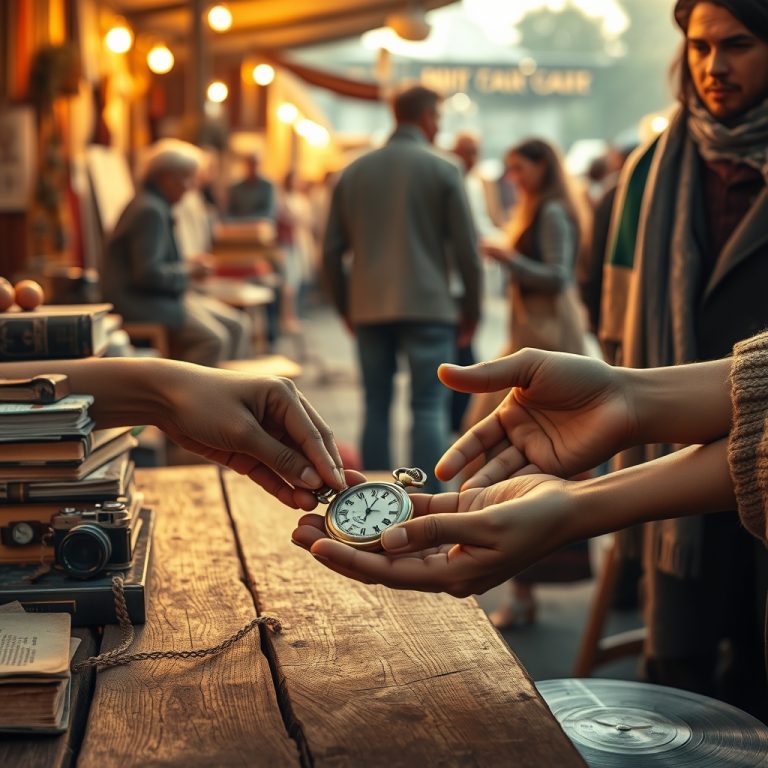

There is a quiet magic in the moment you decide to part with something—when the weight of an object no longer aligns with the shape of your life. The act of sell and trade-in is more than a transaction; it is a conversation between past and future, a bridge between what was and what could be. Every item we release carries a fragment of our story, and in passing it on, we invite someone else to continue the narrative.
But why does this process feel so deeply personal? Perhaps because possessions are never just things. They are time capsules of emotions, memories, and unspoken dreams. When we choose to sell or trade-in, we are not just exchanging goods—we are curating the next chapter of their existence.
The Emotional Alchemy of Letting Go
Letting go is rarely simple. Even when an item no longer serves us, it lingers in the corners of our minds like an old friend we’ve outgrown. The decision to sell and trade-in often begins with a question: *Does this still belong here?*
For some, the answer comes easily—a piece of furniture that no longer fits the aesthetic, a gadget rendered obsolete by newer technology. For others, the process is laden with hesitation. What if we regret it? What if we need it someday? These doubts are not just about the object itself, but about the version of ourselves we associate with it.
Yet, there is liberation in release. When we finally place that item in someone else’s hands, we make space—not just in our homes, but in our hearts. The act of trading in becomes a ritual of renewal, a way of saying: *This part of my story is complete, and I am ready for what comes next.*
Where Value Meets Transformation
The marketplace is not just a place of exchange; it is a stage where objects are reborn. A vintage camera, once gathering dust in an attic, finds a new life in the hands of a passionate photographer. A child’s outgrown bicycle becomes a symbol of freedom for another family. The beauty of sell and trade-in lies in this transformation—where value is not static, but fluid, evolving with each new owner.
But how do we determine what something is worth? Is it the price tag, the sentimental weight, or the potential it holds for someone else? The truth is, value is subjective. A book that changed your life might mean nothing to another, yet its worth is undeniable to you. When we trade in or sell, we are not just assigning a monetary value—we are acknowledging the intangible stories that make an object meaningful.
This is why the best transactions feel less like business and more like storytelling. The seller shares the history, the buyer imagines the future, and in that exchange, the object’s journey continues.
The Art of the Mindful Exchange
Not all sell and trade-in experiences are created equal. Some leave us feeling hollow, as if we’ve lost something without gaining anything in return. Others fill us with a quiet satisfaction, a sense that we’ve participated in something greater than ourselves. What separates the two?
The difference lies in intention. A mindful exchange begins with honesty—about why we’re letting go, about what we hope to gain, and about the kind of home we want our belongings to find. It’s about seeing the person on the other side of the transaction, not as a buyer or seller, but as a fellow traveler in the journey of life.
When we approach trading in with this mindset, the process becomes less about profit and more about connection. We ask questions: *Who will love this next? What story will they write with it?* In doing so, we transform a simple exchange into an act of generosity.
Practical Wisdom for a Smooth Transition
Of course, intention alone isn’t always enough. The logistics of sell and trade-in can feel overwhelming—where to list, how to price, how to ensure a fair deal. The key is to start small. Begin with one item, one platform, one step at a time. Research the market, but don’t let perfectionism paralyze you. The goal isn’t to get the highest price, but to find the right home.
For those new to the process, online marketplaces offer convenience, while local buy-and-sell groups foster community. Consignment shops and trade-in programs provide structure for those who prefer a hands-off approach. Each method has its own rhythm, its own way of weaving your story into the larger tapestry of exchange.
The Ripple Effect of a Single Choice
Every time we choose to sell and trade-in, we set something in motion. A ripple that extends far beyond the initial transaction. That old guitar you sold might inspire a child’s first song. The kitchenware you traded in could become the centerpiece of someone’s first home-cooked meal. These are not just hypotheticals—they are the quiet, everyday miracles of the secondhand economy.
What if we saw these exchanges not as endings, but as beginnings? What if we approached trading in with the same care we give to choosing something new? The objects we release are not just leaving our lives—they are entering someone else’s, carrying with them the potential to shape new memories, new dreams, new stories.
So the next time you stand at the crossroads of letting go, pause for a moment. Consider the journey your belongings have taken, and the ones they have yet to embark upon. In that space between holding on and moving forward, you’ll find the true essence of sell and trade-in—not just as a way to declutter or earn, but as a way to connect, to renew, and to keep the stories alive.
About the Author