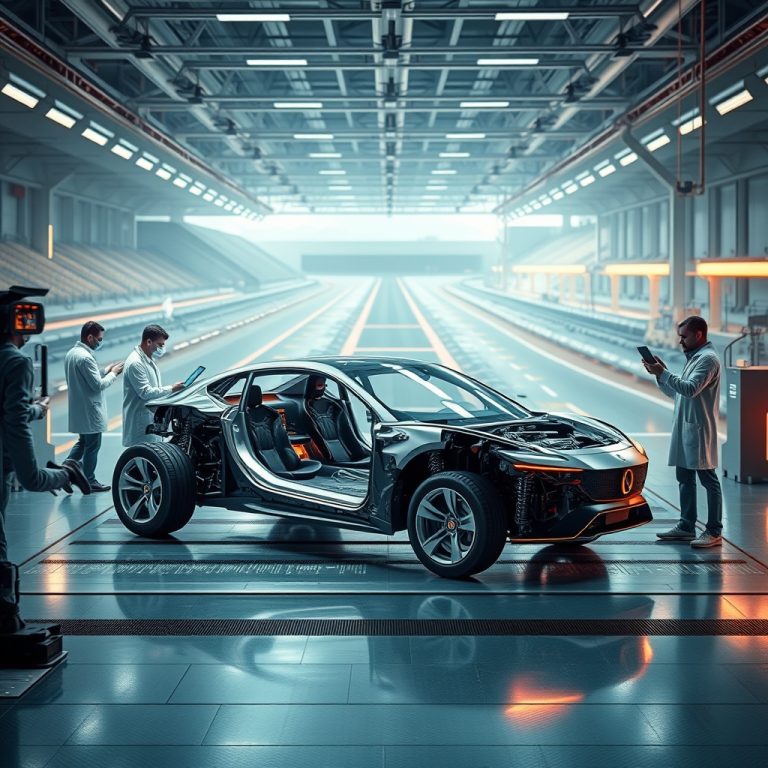

The Automotive Market in 2025 stands at an inflection point, shaped by unprecedented technological advances, shifting consumer preferences, and transformative regulatory landscapes. This dynamic environment heralds a new epoch for manufacturers, suppliers, and end-users alike, compelling industry players to rethink traditional paradigms and embrace innovation at an accelerated pace. As we delve into the multifaceted evolution of the Automotive Market, a confluence of trends emerges, underpinning a future that is more interconnected, sustainable, and user-centric.
The Technological Renaissance in the Automotive Market
The heartbeat of the modern Automotive Market is undeniably technological innovation. In 2025, advancements transcend mere incremental upgrades; they redefine the very essence of mobility. Electrification, autonomous driving, and connectivity form the triad driving this metamorphosis.
Electrification: Beyond the Battery
While electric vehicles (EVs) are no longer novelties, their integration into the Automotive Market has reached a crescendo in 2025. Battery technology breakthroughs have propelled energy density, longevity, and charging efficiency to new heights. Solid-state batteries, once a distant aspiration, are nearing commercial viability, promising to alleviate range anxiety and reduce charging times dramatically.
Moreover, the shift toward electrification encompasses more than passenger cars. Commercial vehicles, motorcycles, and even niche segments like off-road vehicles are embracing electric propulsion, thus broadening the footprint of clean mobility. This widespread adoption compels the entire supply chain to pivot towards sustainable sourcing of raw materials, recycling initiatives, and circular economy models.
Autonomous Driving: From Experimentation to Ubiquity
Autonomous vehicles (AVs) have transitioned from experimental prototypes to integral constituents of the Automotive Market fabric. By 2025, many urban centers host fleets of Level 4 autonomous vehicles operating in controlled environments, delivering passengers and goods with minimal human intervention.
The refinement of AI-driven perception systems, sensor fusion, and real-time decision-making algorithms underpins this progress. Additionally, regulatory frameworks have begun to crystallize, enabling broader deployment while addressing safety and ethical considerations.
The implications extend beyond technology; urban planning and infrastructure design increasingly incorporate AV-friendly elements, such as dedicated lanes and smart traffic signals, signaling a holistic approach to integrating autonomy into daily life.
Connectivity: Vehicles as Digital Ecosystems
In the contemporary Automotive Market, vehicles are no longer isolated machines but nodes within a vast digital ecosystem. The proliferation of 5G and edge computing facilitates seamless vehicle-to-everything (V2X) communication, enhancing safety, efficiency, and user experience.
This connectivity enables real-time traffic updates, predictive maintenance alerts, and personalized infotainment services, creating a deeply immersive driving experience. Moreover, over-the-air (OTA) updates have become standard practice, allowing manufacturers to enhance vehicle capabilities post-purchase, thus extending product life cycles and customer engagement.
Consumer Dynamics and Behavioral Shifts
The Automotive Market evolution is equally propelled by changes in consumer behavior. In 2025, purchasing decisions are influenced by a sophisticated interplay of environmental consciousness, digital literacy, and experiential expectations.
Sustainability as a Primary Driver
Today’s consumers demand more than functionality; they seek products aligned with their ecological values. This heightened environmental awareness has cemented sustainability as a core purchasing criterion in the Automotive Market.
Manufacturers are responding by emphasizing carbon-neutral production processes, ethical sourcing of materials, and offering transparent lifecycle assessments. The burgeoning demand for second-life battery applications and vehicle-to-grid (V2G) integration reflects a broader desire to embed sustainability across the automotive ecosystem.
The Rise of Mobility-as-a-Service (MaaS)
Ownership paradigms are shifting. The proliferation of ride-sharing, car-sharing, and subscription-based models underscores a growing preference for flexible, usage-based mobility solutions. This trend challenges the traditional vehicle ownership model, forcing automakers to diversify revenue streams and develop platforms that cater to this new breed of consumer.
MaaS platforms leverage data analytics and AI to offer tailored mobility experiences, optimizing route planning, vehicle availability, and cost-efficiency. This shift democratizes access to mobility while reducing urban congestion and environmental footprint.
Digital-Native Consumers and Immersive Experiences
The digital natives entering the market possess heightened expectations for technology integration and personalization. Augmented reality (AR) dashboards, voice-activated controls, and seamless smartphone integration are no longer luxuries but essentials.
The Automotive Market in 2025 is witnessing a convergence of automotive engineering and digital entertainment, with manufacturers collaborating with tech firms to deliver immersive, multi-sensory in-car environments. These innovations transform vehicles from mere transport mechanisms into personalized sanctuaries of comfort and connectivity.
Regulatory and Environmental Imperatives Shaping the Market
The evolution of the Automotive Market is not merely technology and consumer-driven; it is significantly shaped by evolving regulatory landscapes and environmental mandates.
Stricter Emission Norms and Green Policies
Governments worldwide are enacting more stringent emission standards to combat climate change, accelerating the phasing out of internal combustion engine (ICE) vehicles. Incentives for EV adoption, such as tax rebates and infrastructure investments, have become ubiquitous, catalyzing market penetration.
These policies compel manufacturers to innovate rapidly while balancing cost, performance, and compliance. The emergence of low-emission zones in urban areas also redefines vehicle usability, favoring electric and hybrid models.
Data Privacy and Cybersecurity Regulations
With vehicles becoming connected digital entities, regulatory attention has pivoted toward data privacy and cybersecurity within the Automotive Market. Legislations like the General Data Protection Regulation (GDPR) and other regional frameworks impose strict requirements on data handling, storage, and user consent.
Manufacturers and service providers must invest heavily in cybersecurity protocols to safeguard against breaches and ensure consumer trust. The evolving regulatory environment fosters a market where security is a competitive differentiator rather than a mere compliance checkbox.
Infrastructure Development and Smart Cities
Regulatory bodies are increasingly advocating for infrastructure that supports new mobility technologies. Smart city initiatives, integrating IoT-enabled traffic management systems, charging networks, and autonomous vehicle corridors, are transforming urban landscapes.
Public-private partnerships are pivotal in this evolution, facilitating investments in resilient, scalable infrastructure that accommodates the Automotive Market‘s futuristic demands.
Supply Chain Resilience and Industrial Innovation
The global disruptions experienced in recent years have exposed vulnerabilities in the Automotive Market supply chains, prompting a strategic overhaul.
Localization and Diversification
Manufacturers are reducing dependency on single-source suppliers and geographically concentrated production hubs. Localization efforts aim to shorten supply chains, improve responsiveness, and mitigate risks from geopolitical tensions and logistical bottlenecks.
This paradigm shift also fosters regional innovation ecosystems, leveraging local talent and resources to enhance competitiveness.
Advanced Manufacturing and Industry 4.0
The infusion of automation, robotics, and additive manufacturing into automotive production is redefining operational efficiency. Industry 4.0 technologies enable real-time monitoring, predictive maintenance, and adaptive manufacturing lines, reducing downtime and optimizing resource utilization.
Moreover, digital twins and simulation tools facilitate rapid prototyping and customization, aligning production with consumer-specific demands in an increasingly personalized market.
Sustainability in Manufacturing Processes
Sustainability extends beyond end products into manufacturing methodologies. The Automotive Market is witnessing the adoption of renewable energy sources in plants, water conservation practices, and waste minimization strategies.
Circular economy principles are gaining traction, with remanufacturing and component reuse becoming integral to production strategies, enhancing resource efficiency and reducing environmental impact.
The Role of Emerging Markets in Shaping the Global Automotive Landscape
Emerging economies are no longer peripheral players but key architects in the global Automotive Market evolution.
Market Expansion and Consumer Base Diversification
Countries in Asia, Africa, and Latin America are witnessing rapid urbanization and income growth, fueling demand for personal mobility. Local manufacturers and global OEMs are tailoring products to meet the unique needs of these markets, balancing affordability with technological advancement.
This expansion diversifies the global automotive consumer base, injecting new dynamics into market competition and innovation.
Leapfrogging Through Technology Adoption
Emerging markets are uniquely positioned to leapfrog legacy technologies, directly adopting cutting-edge solutions such as electric two-wheelers, shared mobility platforms, and digital payment integration.
Such technological jumps enable accelerated modernization of transportation systems, often outpacing mature markets constrained by entrenched infrastructure and regulatory inertia.
Strategic Collaborations and Joint Ventures
Global automotive players are forging partnerships with local firms to navigate regulatory complexities and leverage market insights. These collaborations foster knowledge exchange, capacity building, and co-development of products optimized for emerging market conditions.
The resultant synergies not only boost local economies but also enrich the global Automotive Market ecosystem.
Challenges and Opportunities Ahead
Despite promising trajectories, the Automotive Market in 2025 confronts several formidable challenges alongside vast opportunities.
Raw Material Scarcity and Ethical Sourcing
The surge in EV production strains supplies of critical minerals such as lithium, cobalt, and nickel. Ensuring ethical sourcing and sustainable mining practices is paramount to avoid environmental degradation and social injustices.
Innovations in battery chemistry, recycling, and alternative materials research are crucial to alleviating supply constraints and fostering responsible growth.
Integration of Artificial Intelligence and Human Factors
While AI catalyzes autonomous and connected vehicle capabilities, harmonizing machine intelligence with human behavior remains complex. Ensuring transparency, predictability, and user trust in AI-driven systems is essential to mainstream adoption.
Human-machine interface design must evolve to balance automation benefits with user control and comfort.
Economic Volatility and Market Uncertainty
Global economic fluctuations, geopolitical tensions, and fluctuating energy prices inject uncertainty into the Automotive Market. Manufacturers must remain agile, leveraging scenario planning and flexible production to navigate volatility.
Simultaneously, emerging technologies open new revenue streams, such as data monetization and software-as-a-service models, which can buffer economic shocks.
The Automotive Market in 2025 epitomizes a sector in relentless flux, orchestrated by technological breakthroughs, evolving consumer mores, and rigorous regulatory frameworks. Electrification, autonomy, and connectivity redefine mobility’s contours, while sustainability and digitalization permeate every facet of the industry.
Manufacturers, suppliers, and stakeholders who embrace this paradigm shift with agility and vision will not only survive but thrive, shaping a future where mobility is safer, cleaner, and profoundly more integrated into the fabric of everyday life.
As the Automotive Market accelerates toward this horizon, the journey itself is a testament to human ingenuity and the ceaseless quest for progress.
About the Author