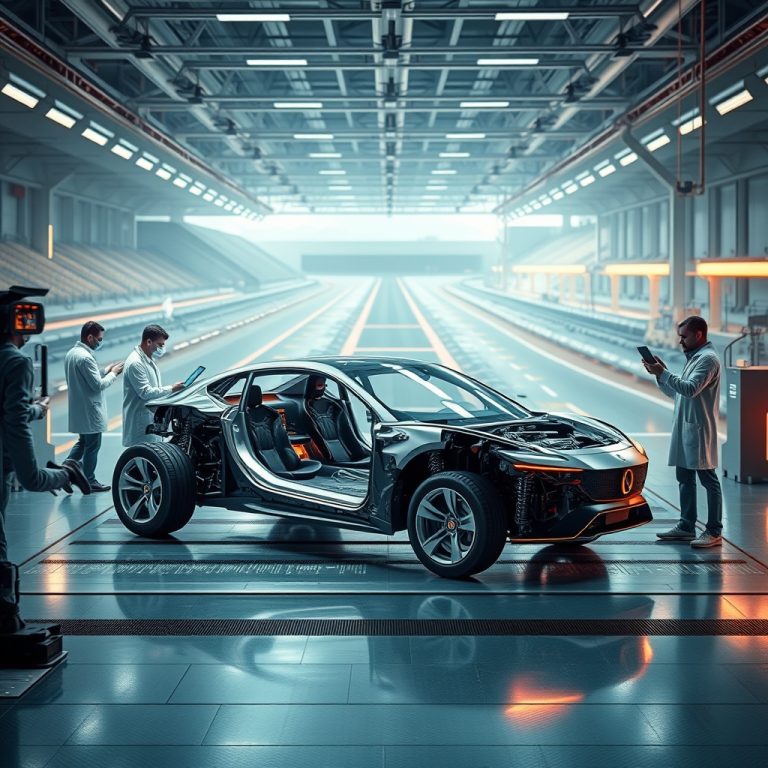

In the age of digital dashboards and intelligent vehicles, the term automotive diagnostics has become a cornerstone in the lexicon of modern motoring. For the everyday driver, this concept often remains cloaked in mystery—an esoteric process managed by mechanics behind closed garage doors. Yet, understanding the fundamentals of this technological marvel can empower vehicle owners, enhance maintenance strategies, and prevent costly breakdowns.
This comprehensive exploration unveils the inner workings of automotive diagnostics, delving deep into its history, evolution, systems, tools, and real-world implications.
The Genesis of Automotive Self-Awareness
Long before electronic brains governed our cars, diagnostics were purely mechanical. Drivers and mechanics relied on experience and auditory cues—the rattle of a loose bolt, the hiss of escaping air, or the acrid smell of burnt oil—to determine a vehicle’s health. It was guesswork combined with a wrench.
The 1980s marked a radical shift. With the rise of onboard computers, vehicles became self-aware in a rudimentary way. The introduction of the On-Board Diagnostics (OBD) system—specifically OBD-I—was a watershed moment. It allowed cars to store fault codes and signal issues via a dashboard light. This evolution laid the groundwork for the sophisticated automotive diagnostics systems we rely on today.
Anatomy of a Diagnostic System
At the core of automotive diagnostics lies a symphony of sensors, control modules, and scanning interfaces. Vehicles now come equipped with an intricate network of Electronic Control Units (ECUs) that govern everything from engine timing to adaptive cruise control. Each ECU communicates with others, forming an integrated neural network.
Key Components:
-
Sensors: Measure conditions such as oxygen levels, engine temperature, throttle position, wheel speed, and more.
-
Actuators: Carry out instructions from control modules—like adjusting fuel injectors or engaging the cooling fan.
-
ECUs: The digital brains of the car. Modern vehicles may have 50 or more.
-
Diagnostic Link Connector (DLC): The access point for external scan tools, typically located beneath the dashboard.
The entire system is governed by a central language of fault codes—Diagnostic Trouble Codes (DTCs)—that reveal specific issues within the vehicle.
The Rise of OBD-II: A Universal Language
In 1996, OBD-II became mandatory in vehicles sold in the United States. Unlike its predecessor, OBD-II provided standardized protocols and connectors, ushering in a new era of automotive diagnostics. Now, any compatible scan tool could retrieve fault codes, regardless of make or model.
This universality democratized diagnostics. Independent repair shops could service a broader range of vehicles. Even car owners could purchase affordable scan tools to monitor their vehicle’s health.
Decoding the Codes: DTC Structure
A Diagnostic Trouble Code is not just a random string of characters—it’s a systematic code with a defined structure. For example:
P0302
-
P = Powertrain (engine/transmission)
-
0 = Generic code (shared across all manufacturers)
-
3 = Misfire detection
-
02 = Cylinder 2
This code translates to: Cylinder 2 Misfire Detected.
Interpreting these codes accurately is at the heart of automotive diagnostics. But raw data alone isn’t enough. Contextual interpretation, combined with inspection and testing, is essential for accurate repair.
The Tools of the Trade
Gone are the days when a mechanic’s primary tool was a stethoscope and a flashlight. Today’s technicians wield sophisticated equipment designed to interface with vehicle systems and pinpoint faults in granular detail.
Notable Tools:
-
OBD-II Scanners: Handheld or Bluetooth devices that read DTCs, live data, and readiness monitors.
-
Oscilloscopes: Visualize sensor waveforms and electronic signals.
-
Multimeters: Measure voltage, resistance, and continuity.
-
Smoke Machines: Diagnose vacuum and exhaust leaks.
-
Scan Software Suites: Advanced platforms used by OEMs and high-end repair centers for deep system interrogation.
These tools, when paired with expert knowledge, transform mere fault codes into actionable solutions.
Real-Time Data: Beyond the Check Engine Light
The check engine light is merely the tip of the diagnostic iceberg. Behind that illumination is a treasure trove of real-time data known as Parameter IDs (PIDs). These include:
-
Engine RPM
-
Mass Air Flow (MAF)
-
Fuel Trim Values
-
Throttle Position
-
Oxygen Sensor Voltage
By analyzing PIDs, technicians can observe system behavior under various conditions. For instance, a lean fuel trim under load may indicate a clogged fuel filter or a faulty MAF sensor. This data-driven insight elevates automotive diagnostics from reactive to predictive.
Predictive Maintenance and Prognostics
Enter the realm of prognostics—an advanced branch of automotive diagnostics that predicts failures before they happen. With AI-driven systems and machine learning algorithms, vehicles can now forecast component degradation based on patterns, driving behavior, and historical data.
Imagine receiving a notification that your water pump is likely to fail within 300 miles based on thermal efficiency data. That’s not science fiction—it’s emerging reality.
Prognostics allow fleet operators, in particular, to optimize maintenance schedules, reduce downtime, and enhance safety.
The Role of Telematics
Telematics fuses telecommunications and informatics, enabling vehicles to transmit diagnostic data remotely. Insurance companies use it for usage-based premiums. Fleet managers use it for real-time monitoring. Car owners benefit from apps that show fault codes, schedule maintenance, and even initiate remote repairs.
This layer of connectivity elevates automotive diagnostics from a workshop task to a cloud-integrated ecosystem.
Common Diagnostic Scenarios
-
Intermittent Misfire: Perhaps the most challenging issue. Requires analysis of misfire counters, freeze-frame data, and potential injector balance testing.
-
Evaporative Emission Leak (EVAP): Detected through pressure tests and smoke inspections. Commonly caused by loose gas caps or deteriorated hoses.
-
Transmission Slippage: Diagnostic scans reveal shift solenoid operation, fluid temperature, and gear ratio errors.
-
ABS Activation at Low Speed: Typically a failing wheel speed sensor—confirmed through oscilloscope waveform analysis.
Each of these conditions illustrates the depth and complexity of modern automotive diagnostics, where pinpoint accuracy is not optional—it’s essential.
DIY Diagnostics: The Rise of the Empowered Driver
Thanks to consumer-grade scan tools and mobile apps, drivers now wield unprecedented insight into their vehicles. Brands like FIXD, BlueDriver, and Carista offer plug-and-play solutions with intuitive interfaces.
Benefits include:
-
Reading and clearing fault codes
-
Monitoring live data
-
Performing emissions readiness checks
-
Accessing repair reports and suggested fixes
While these tools don’t replace professional expertise, they arm drivers with data—eliminating guesswork and reducing dependency.
Diagnostic Limitations and Pitfalls
Despite its prowess, automotive diagnostics is not infallible. Misinterpretation of fault codes can lead to unnecessary repairs or overlooked issues. False positives and “ghost codes” (temporary errors caused by voltage spikes or environmental factors) are not uncommon.
Further complications arise from:
-
Aftermarket Modifications: Non-OEM parts can cause compatibility issues.
-
Software Glitches: Firmware bugs in ECUs may throw incorrect codes.
-
Multiple Faults: A single symptom may involve cascading failures across multiple systems.
Skilled technicians must rely on critical thinking, procedural testing, and sometimes even gut instinct to separate signal from noise.
The Human Factor: Art Meets Science
While machines excel at logic, human technicians bring intuition, experience, and nuanced understanding. Diagnosing a fault isn’t just about reading a code—it’s about understanding the story behind it. Two vehicles with the same DTC may require different fixes based on context, environment, and mechanical history.
This human element remains irreplaceable, underscoring that automotive diagnostics is both a science and an art.
The Future: AI, Cloud Integration, and Self-Healing Cars
The horizon of automotive diagnostics is a landscape of astonishing innovation. We are entering an era where cars not only diagnose themselves but propose, initiate, and even execute repairs autonomously.
Emerging trends include:
-
AI-Driven Diagnostics: Systems that learn from millions of repair scenarios to suggest the most probable cause.
-
Over-the-Air (OTA) Fixes: Software-related issues can be patched remotely—no shop visit required.
-
Self-Healing Vehicles: Adaptive systems that recalibrate or isolate faults to maintain functionality.
In parallel, blockchain-based service records may ensure tamper-proof diagnostic histories—adding transparency and trust to used car markets.
Impact on the Automotive Ecosystem
The evolution of automotive diagnostics is reshaping the industry. Dealerships, repair shops, parts suppliers, and even insurers must adapt to this data-rich environment.
For example:
-
Dealers invest in proprietary diagnostic platforms with deep OEM access.
-
Independent Garages adopt hybrid tools compatible across brands.
-
Insurers adjust policies based on diagnostic health metrics.
-
Parts Distributors optimize inventory based on diagnostic trends.
Even environmental agencies leverage diagnostic data for emissions control and compliance enforcement.
The journey from check engine lights to self-aware vehicles has been nothing short of revolutionary. Automotive diagnostics now sits at the nexus of engineering, data science, and artificial intelligence—transforming the way we maintain, repair, and interact with vehicles.
For drivers, this means greater control, transparency, and peace of mind. For technicians, it demands constant upskilling and analytical rigor. And for the industry at large, it signals a seismic shift toward smarter, safer, and more sustainable mobility.
Beneath the surface of every purring engine and responsive throttle lies a network of intelligent systems, quietly monitoring, recording, and optimizing. It is in this silent dialogue of codes and signals that the true essence of automotive diagnostics is revealed—a discipline not of guesswork, but of precision.
About the Author