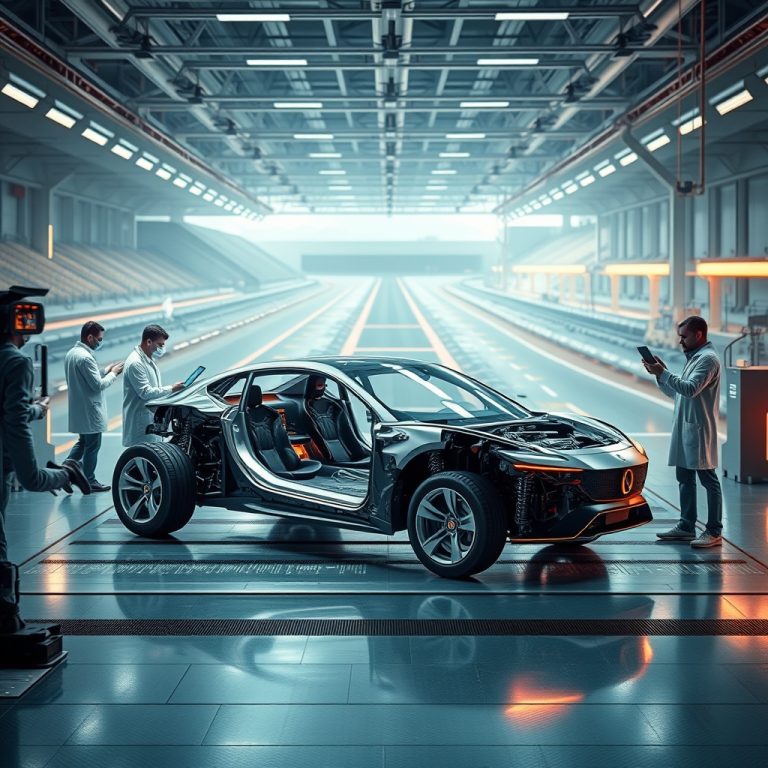
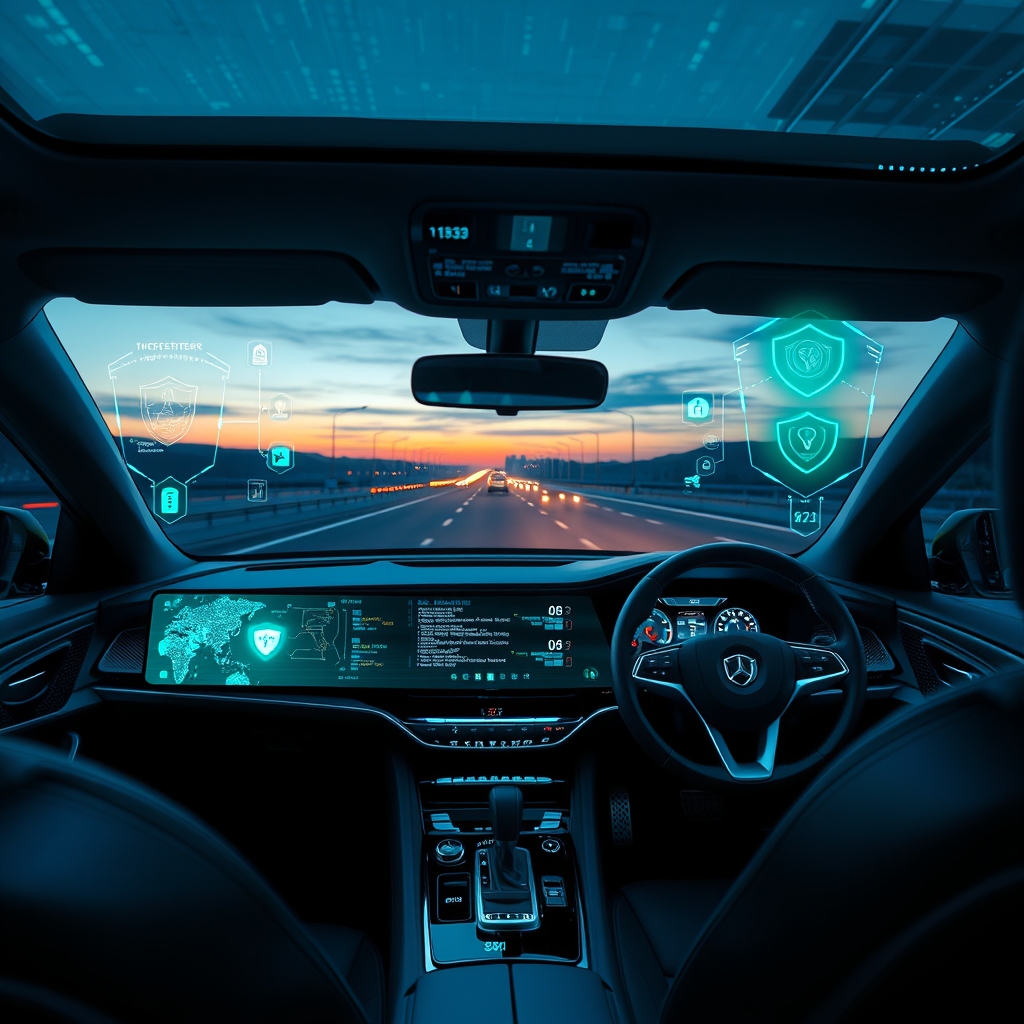
The modern automobile is no longer just a mechanical marvel—it’s a rolling computer, packed with sensors, software, and connectivity features that redefine what it means to drive. From advanced infotainment systems to autonomous driving capabilities, today’s vehicles are more connected than ever. But with this connectivity comes a new frontier of vulnerability: cybersecurity threats. As cars become smarter, the need to protect them from digital intrusions has never been more critical.
The Digital Battlefield Under the Hood
Imagine driving down the highway when suddenly, your car’s systems begin behaving erratically. The infotainment screen glitches, the brakes engage unpredictably, or worse, the steering wheel locks up entirely. This isn’t a scene from a sci-fi thriller—it’s a very real possibility if automotive cybersecurity isn’t prioritized. Modern vehicles rely on dozens of electronic control units (ECUs) that communicate via internal networks, making them susceptible to hacking if left unprotected.
In 2015, security researchers demonstrated how they could remotely take control of a Jeep Cherokee, exploiting vulnerabilities in its Uconnect system. The experiment, conducted with the permission of the manufacturer, led to a recall of 1.4 million vehicles and served as a wake-up call for the industry. Since then, automakers and cybersecurity firms have been racing to fortify vehicles against such threats, but the challenge is evolving as quickly as the technology itself.
The Anatomy of an Automotive Cyber Attack
Automotive cyber threats can manifest in several ways, each with potentially devastating consequences. One of the most common entry points is through the vehicle’s infotainment system, which often connects to external networks via Bluetooth, Wi-Fi, or cellular data. Hackers can exploit weak points in these connections to gain access to the car’s internal systems, potentially taking control of critical functions like braking, acceleration, or steering.
Another growing concern is the rise of over-the-air (OTA) updates, which allow manufacturers to remotely update a vehicle’s software. While OTA updates offer convenience and efficiency, they also create a potential gateway for malicious actors if not properly secured. A compromised update could introduce malware into the vehicle’s systems, giving hackers a foothold to manipulate its operations.
Supply chain attacks are also a significant risk. As automakers increasingly rely on third-party vendors for components and software, a single weak link in the supply chain can expose an entire fleet of vehicles to cyber threats. For example, a compromised sensor or ECU from a supplier could be used to infiltrate a vehicle’s network, making it difficult for manufacturers to detect and mitigate the threat until it’s too late.
Building a Digital Fortress: Strategies for Automotive Cybersecurity
To combat these threats, the automotive industry is adopting a multi-layered approach to cybersecurity. One of the foundational strategies is the implementation of secure-by-design principles, where cybersecurity is integrated into the vehicle’s architecture from the ground up. This includes encrypting data transmissions, segmenting critical systems to limit the spread of potential breaches, and using hardware security modules (HSMs) to protect sensitive information.
Another key defense is the use of intrusion detection and prevention systems (IDPS), which monitor a vehicle’s network for unusual activity. These systems can identify and block malicious traffic in real-time, preventing hackers from gaining control of the vehicle. Automakers are also investing in regular software updates to patch vulnerabilities as they are discovered, ensuring that vehicles remain protected against the latest threats.
Collaboration is also essential in the fight against automotive cyber threats. Automakers, suppliers, and cybersecurity firms are increasingly working together to share threat intelligence and best practices. Initiatives like the Automotive Information Sharing and Analysis Center (Auto-ISAC) provide a platform for industry stakeholders to collaborate on identifying and mitigating cyber risks, fostering a collective defense against potential attacks.
The Role of Regulations and Standards
Governments and regulatory bodies are also playing a crucial role in shaping the future of automotive cybersecurity. In 2021, the United Nations introduced the UN Regulation No. 155, which establishes a framework for cybersecurity management systems in vehicles. The regulation requires automakers to implement measures to identify, assess, and mitigate cyber risks throughout the vehicle’s lifecycle, from design to decommissioning.
In the United States, the National Highway Traffic Safety Administration (NHTSA) has issued guidelines for automotive cybersecurity, encouraging manufacturers to adopt a proactive approach to protecting vehicles from digital threats. These regulations are not just about compliance—they’re about ensuring that the cars of tomorrow are safe, secure, and resilient in the face of evolving cyber risks.
The Road Ahead: Balancing Innovation and Security
As vehicles become more connected and autonomous, the stakes for automotive cybersecurity will only continue to rise. The shift toward fully autonomous driving, in particular, presents a new set of challenges. Self-driving cars rely on complex algorithms and vast amounts of data to navigate the road, making them prime targets for cyber attacks. A breach in an autonomous vehicle’s systems could have catastrophic consequences, not just for the occupants of the car, but for pedestrians and other drivers as well.
The future of automotive cybersecurity will likely involve a combination of advanced technologies, such as artificial intelligence and machine learning, to detect and respond to threats in real-time. AI-driven systems can analyze vast amounts of data to identify patterns and anomalies that might indicate a cyber attack, allowing for faster and more effective responses. Additionally, blockchain technology is being explored as a way to secure vehicle-to-vehicle (V2V) and vehicle-to-infrastructure (V2I) communications, ensuring that data exchanged between cars and smart city systems remains tamper-proof.
The journey toward a secure automotive future is not without its challenges, but it’s a journey that the industry must undertake with urgency and determination. As cars become more integrated into the digital ecosystem, the line between physical and cyber threats will continue to blur. The key to success lies in staying one step ahead of the hackers, embracing innovation while never losing sight of the fundamental principle that safety and security must always come first. The cars of tomorrow will be defined not just by their speed or efficiency, but by their resilience in the face of an ever-evolving digital landscape.
About the Author