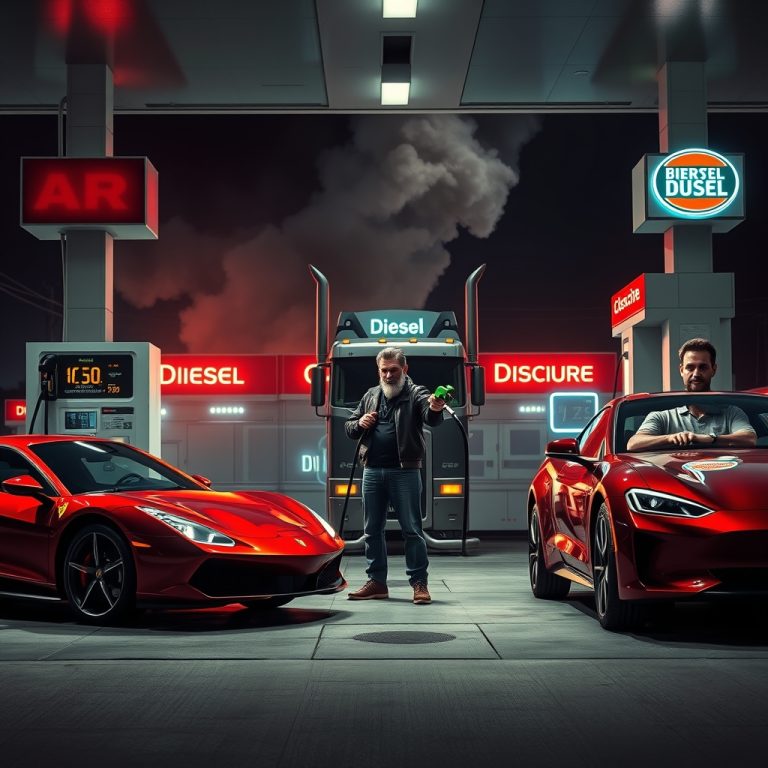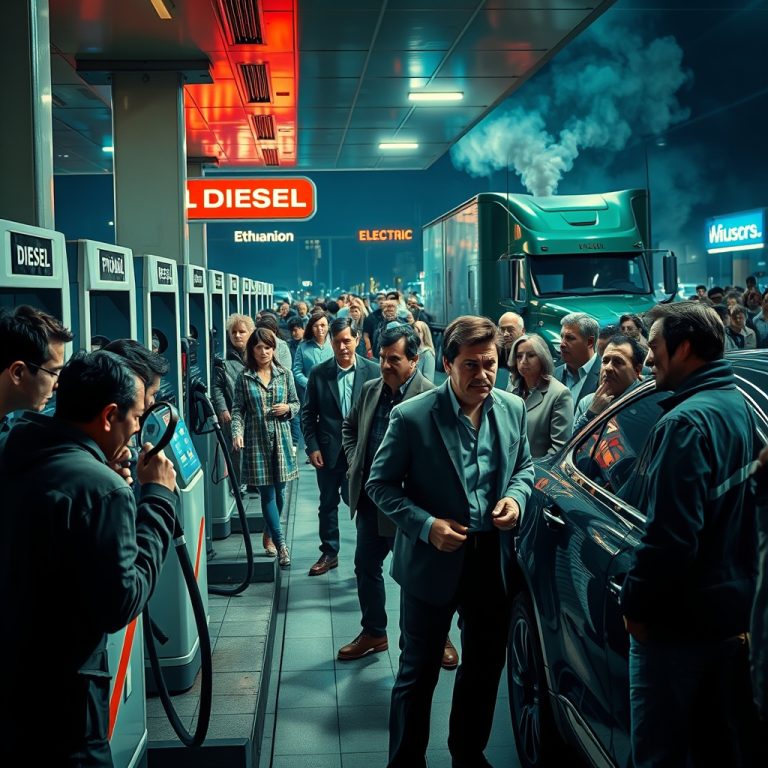

Oh, great. Another day, another existential crisis at the pump. You stand there, nozzle in hand, staring at the options like they’re the final round of a game show where the prize is either a smooth ride or a check engine light that haunts your dreams. Fuel type—the one decision that makes you feel like a genius when it goes right and a complete idiot when your car starts coughing like it smoked a pack of unfiltered Camels. But hey, at least you’re not alone in this circus of combustion confusion.
The Great Fuel Type Debate: Because Your Car’s Opinion Matters More Than Yours
Let’s start with the basics, shall we? Your car doesn’t just run on hope and prayers—it runs on fuel type, and apparently, it has very strong opinions about it. Regular, premium, diesel, or that fancy-schmancy ethanol blend that makes you feel like you’re saving the planet while your wallet weeps silently in the corner. The problem? Your car’s manual is written in the same tone as a passive-aggressive note from your HOA. “Use premium fuel for optimal performance,” it says, as if “optimal performance” is code for “don’t embarrass me in front of the other cars at the stoplight.”
But here’s the kicker: most of us don’t even know why we’re shelling out extra cash for premium. Is it because we’re convinced our car will purr like a kitten? Or is it because we once heard a guy at a gas station say, “Premium’s better, bro,” and we nodded like we understood what that even means? Spoiler alert: unless you’re driving a high-performance vehicle or a luxury ride that probably judges your life choices, regular unleaded is probably just fine. But try telling that to the guy who treats his car like it’s a Michelin-starred restaurant that only accepts the finest ingredients.
Diesel: The Fuel Type for People Who Enjoy the Smell of Regret
Ah, diesel. The fuel type that’s either a godsend or a curse, depending on who you ask. If you’re driving a truck that could double as a small apartment, diesel is your best friend. It’s efficient, it’s powerful, and it makes you feel like you could tow a small country if you really wanted to. But if you’re one of those people who bought a diesel car because you thought it was “cool” and now you’re stuck paying for DEF fluid like it’s liquid gold, well, welcome to the club. We meet every Tuesday at the auto parts store, where we cry into our overpriced oil filters.
And let’s not forget the environmentalists who love to side-eye diesel drivers. “Oh, you’re killing the planet with your soot-spewing monstrosity,” they say, as if their Prius isn’t just a different kind of environmental compromise. Newsflash: every fuel type has its downsides. Diesel might be the villain of the piece, but at least it’s honest about it. Unlike that ethanol blend that promises to save the world while quietly corroding your engine.
Ethanol: The Fuel Type That’s Basically a Participation Trophy
Ethanol. The fuel type that’s either a brilliant way to reduce emissions or a sneaky government plot to make your car run like it’s powered by a lawnmower. E10, E15, E85—it’s like a buffet of confusion where the only thing you know for sure is that your mileage is going to take a hit. But hey, at least you’re doing your part to support corn farmers, right? Never mind that your car’s performance is now as inconsistent as a toddler’s mood swings.
And don’t even get me started on flex-fuel vehicles. “Oh, you can run on anything!” they say, as if your car is some kind of automotive chameleon. In reality, it’s more like a picky eater that will tolerate E85 but secretly dreams of premium unleaded. But sure, let’s all pretend that filling up with ethanol is a noble sacrifice and not just a way to make your wallet lighter and your engine louder.
Premium vs. Regular: The Fuel Type Equivalent of a Class War
Here’s where things get really fun. The fuel type hierarchy is real, and it’s more rigid than a British boarding school. Premium is the aristocracy—smooth, refined, and utterly convinced of its own superiority. Regular is the working class—reliable, unpretentious, and just trying to get by without causing a scene. And then there’s diesel, lurking in the shadows like the weird cousin who shows up to family gatherings with a flask and a conspiracy theory.
But here’s the thing: unless your car specifically demands premium, you’re not doing it any favors by splurging. It’s like buying a designer handbag for a toddler. Sure, it looks nice, but at the end of the day, it’s still just a bag (or in this case, a car that’s going to get you from point A to point B regardless). But try telling that to the guy who treats his fuel choice like a status symbol. “Oh, you use regular? How… quaint.”
The Octane Obsession: Because Apparently, Higher Numbers Mean You’re Winning at Life
Octane ratings. The fuel type equivalent of a SAT score for your car. The higher the number, the smarter your engine must be, right? Wrong. Octane ratings are just a measure of how much compression the fuel can handle before it starts knocking like a bad neighbor at 3 AM. But sure, let’s all pretend that 93 octane is the key to unlocking our car’s hidden potential. “My car runs better on premium,” you say, as if your Honda Civic is suddenly going to transform into a Ferrari because you fed it the good stuff.
Newsflash: unless you’re driving a high-performance vehicle, that extra octane is about as useful as a screen door on a submarine. But hey, if it makes you feel better to spend an extra 50 cents per gallon, who am I to judge? Just don’t come crying to me when your bank account starts looking like it’s been on a diet of ramen noodles and regret.
So, What’s the Right Fuel Type for You? (Spoiler: It’s Probably Not What You Think)
At the end of the day, the right fuel type for your car is the one it was designed to run on. Check your manual, ignore the guy at the gas station who swears by premium, and stop treating your fuel choice like it’s a personality test. Your car doesn’t care if you’re a premium snob or a regular rebel—it just wants to get you where you’re going without making a scene.
And if all else fails, just remember: no matter what fuel type you choose, you’re still just one bad decision away from a check engine light. So fill up, drive safe, and try not to overthink it. After all, the only thing worse than picking the wrong fuel is realizing that your car’s opinion on the matter is the only one that actually counts.
About the Author