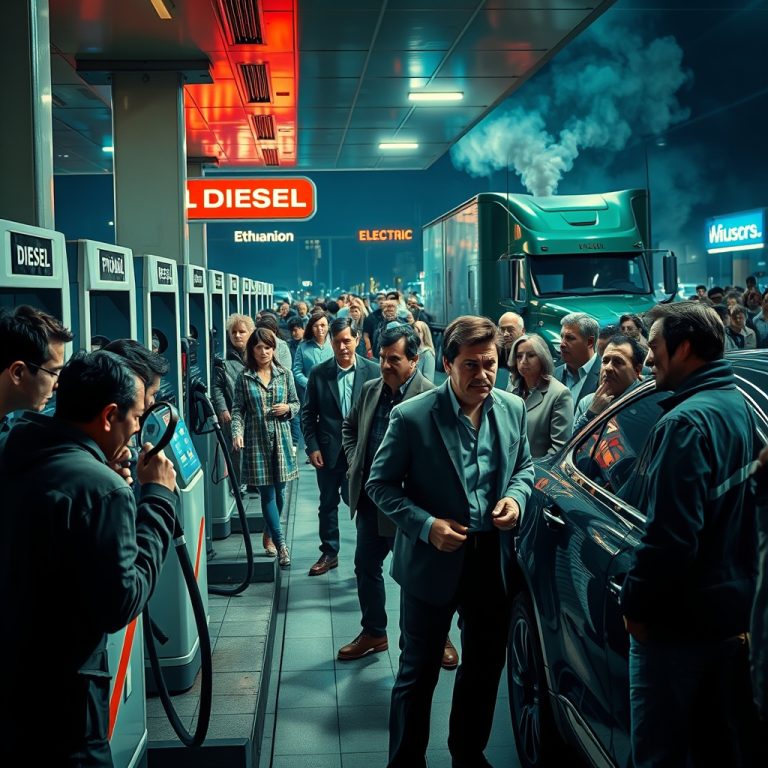
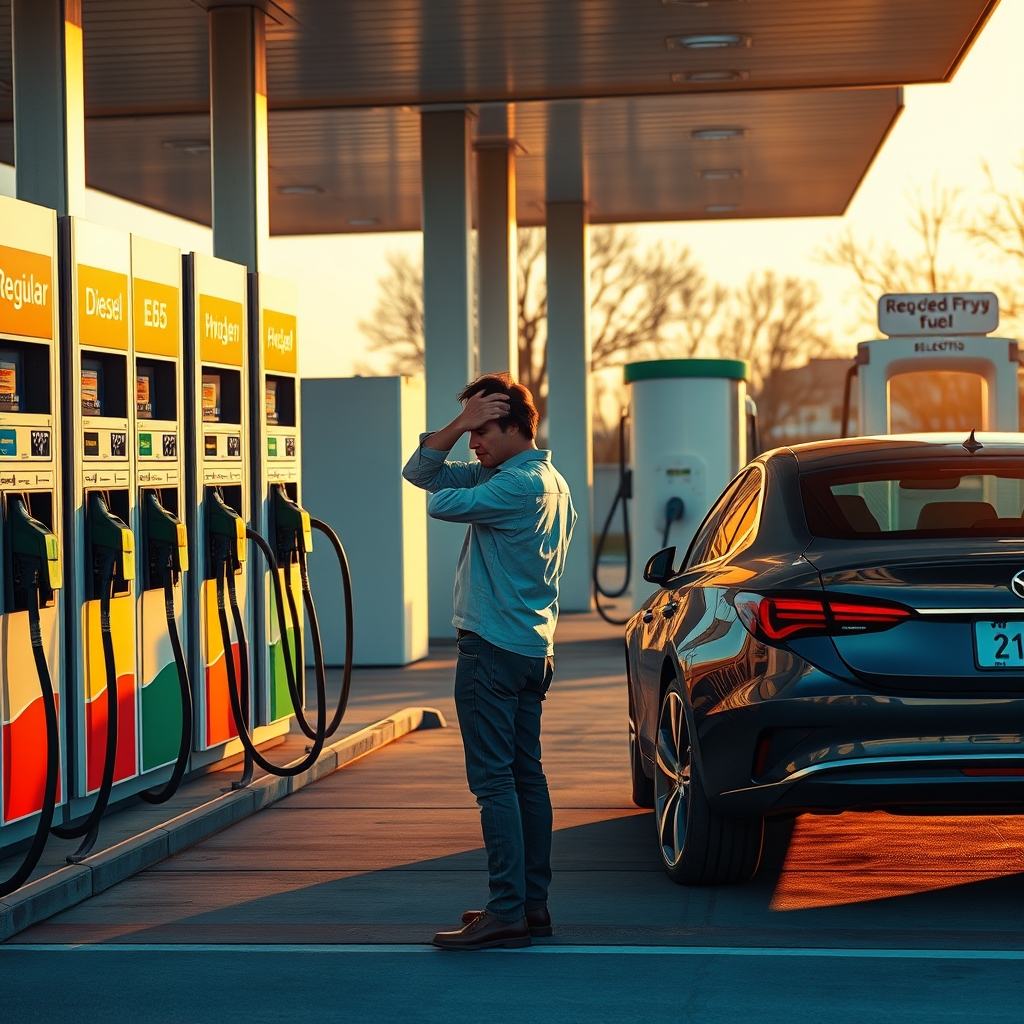
Oh, great. Another day, another existential crisis at the pump. You stand there, nozzle in hand, staring at the bewildering array of options like a deer in headlights—except the deer probably knows whether it’s a diesel or a salad kind of creature. Meanwhile, you’re just praying your car doesn’t stage a mutiny if you pick the wrong fuel type. Because, let’s face it, your ride has standards higher than your last Tinder date, and it’s not afraid to judge you for your choices.
The Great Fuel Type Dilemma: Or, How I Learned to Stop Worrying and Love the Pump
Let’s start with the basics, shall we? There are more fuel types out there than there are excuses for why you didn’t hit the gym this week. Gasoline, diesel, ethanol blends, premium, regular—it’s like a buffet where every option comes with a side of anxiety. And just like that buffet, you’re never quite sure if you’re making the right choice until your stomach (or in this case, your engine) starts protesting.
Gasoline is the default, the vanilla ice cream of fuel types. It’s what most of us use, and it’s fine—if you’re into “fine.” Then there’s diesel, the brooding, mysterious cousin who shows up to the party with a leather jacket and a cigarette, whispering promises of better fuel economy and torque. But beware: diesel engines are high-maintenance, like that one friend who only eats organic, gluten-free, locally sourced kale chips. One wrong move, and you’re looking at a repair bill that’ll make your wallet weep.
And let’s not forget the ethanol blends, the fuel type equivalent of that one person who insists on telling you about their “journey to wellness” while sipping a green smoothie. E85, E15—it’s all just gasoline with a side of corn, trying to convince you it’s saving the planet. Spoiler alert: it’s not. But hey, at least it’s cheaper, right? Until your fuel economy takes a nosedive and you’re filling up twice as often. Fun!
Premium vs. Regular: The Class Warfare of the Pump
Ah, the age-old debate: premium or regular? It’s like choosing between a designer handbag and a knockoff from a street vendor. Sure, the premium fuel type costs more, but does it make your car purr like a satisfied cat? Maybe. Or maybe it’s just a placebo effect, and your engine is laughing at you behind your back.
Here’s the thing: unless your car’s manufacturer specifically demands premium, you’re probably just burning money faster than a pyromaniac in a fireworks factory. Premium fuel has a higher octane rating, which sounds fancy, but all it really means is that it’s less likely to cause knocking in high-performance engines. If your ride is a humble sedan or a minivan, regular is more than enough. Save the premium for your ego.
But what if you’re one of those people who insists on using premium “just because”? Congratulations, you’ve officially joined the ranks of people who buy organic water. Sure, it might make you feel superior, but your car isn’t sending you a thank-you card. It’s just sipping its overpriced juice and judging you for not upgrading to a hybrid.
Alternative Fuels: Because Gasoline is So Last Century
If you’re feeling particularly adventurous (or guilty about your carbon footprint), you might be tempted to explore alternative fuel types. Electric? Hydrogen? Biodiesel? It’s like the Wild West out there, except instead of gold, you’re mining for the next big thing in energy.
Electric vehicles (EVs) are the shiny new toy everyone wants to play with. No fuel type needed—just plug it in and go. But let’s be real: unless you’re living in a utopia with charging stations on every corner, you’re going to spend a lot of time praying to the range gods. And don’t even get started on the environmental cost of producing those batteries. Spoiler: it’s not as green as you’d hope.
Then there’s hydrogen, the fuel type that’s been “just around the corner” for the past two decades. It’s clean, it’s efficient, and it’s about as common as a unicorn in a tuxedo. Good luck finding a hydrogen station, let alone affording the car that runs on it. But hey, at least you’ll be the coolest (and only) kid on the block with a hydrogen-powered ride.
Biodiesel: The Fuel Type for People Who Miss the 2000s
Biodiesel is like the emo phase of fuel types. It’s made from vegetable oils and animal fats, and it’s supposed to be better for the environment. But let’s be honest: if you’re running your car on recycled french fry grease, you’re either a pioneer or a hoarder. Either way, your car might not be as thrilled about it as you are.
Biodiesel can gel in cold weather, clog your fuel filter, and turn your engine into a science experiment gone wrong. But if you’re the type who enjoys living on the edge (or just really loves the smell of fried food), go for it. Just don’t say we didn’t warn you.
The Bottom Line: Your Car’s Opinion is the Only One That Matters
At the end of the day, the only fuel type that truly matters is the one your car was designed to run on. Check your owner’s manual, ignore the hype, and stop trying to impress your engine with premium blends it doesn’t need. Your wallet will thank you, and your car might even stop side-eyeing you every time you pull into the driveway.
And if all else fails, just remember: no matter what fuel type you choose, your car will still find a way to judge you. Whether it’s through a check engine light, a mysterious rattle, or the silent treatment when you turn the key, your ride has opinions. The least you can do is feed it the right kind of juice and hope it doesn’t hold a grudge.
About the Author