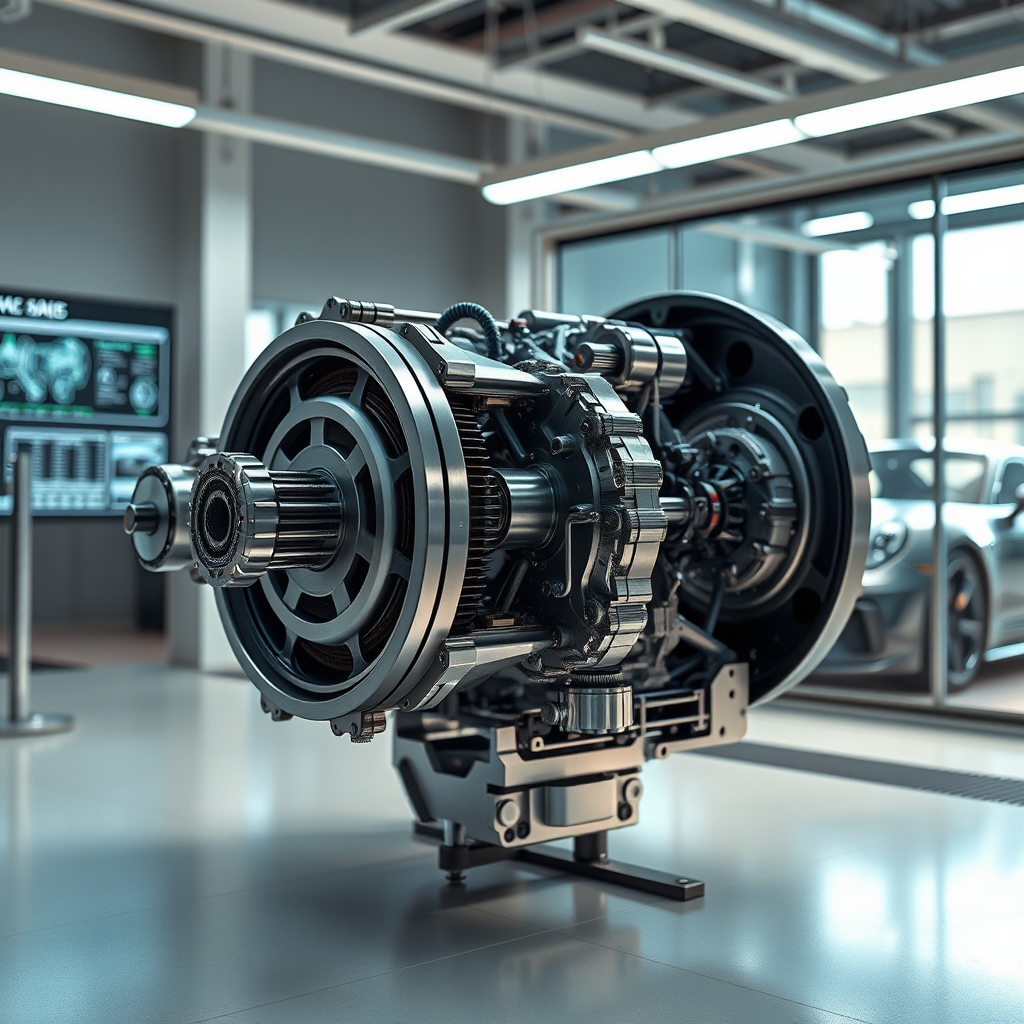
The automotive world is no stranger to innovation, but few advancements have transformed the driving experience as profoundly as the dual-clutch transmission (DCT). Often overshadowed by the buzz around electric vehicles and autonomous driving, DCTs represent a quiet revolution in how power is delivered from engine to wheels. For enthusiasts and everyday drivers alike, this technology bridges the gap between the raw engagement of a manual gearbox and the seamless convenience of an automatic, all while pushing the boundaries of efficiency and performance.
The Birth of a New Era in Transmission Technology
The concept of a dual-clutch transmission isn’t new—it traces its roots back to the 1930s, when French inventor Adolphe Kégresse first patented the idea. However, it wasn’t until the early 2000s that the technology gained traction in production vehicles, thanks to advancements in computing power and precision engineering. Unlike traditional automatic transmissions, which rely on a torque converter to manage gear shifts, DCTs use two separate clutches: one for odd-numbered gears and another for even-numbered gears. This allows for lightning-fast gear changes, as the next gear is pre-selected and ready to engage before the current one is disengaged.
The result? A transmission that can shift gears in mere milliseconds, far quicker than even the most skilled human driver. This speed doesn’t just translate to faster acceleration; it also enhances fuel efficiency by minimizing power loss during shifts. For performance-oriented vehicles, DCTs have become the gold standard, offering the best of both worlds: the control of a manual with the ease of an automatic.
How Dual-Clutch Transmissions Work: The Mechanics Behind the Magic
At the heart of a DCT are two clutches, each connected to a separate input shaft. One clutch controls the odd gears (1st, 3rd, 5th, and sometimes 7th), while the other manages the even gears (2nd, 4th, 6th). When the vehicle is in motion, the transmission pre-selects the next gear based on driving conditions, engine load, and driver input. As the driver accelerates or decelerates, the system seamlessly swaps between clutches, ensuring that power delivery remains uninterrupted.
This pre-selection process is what sets DCTs apart from traditional automatics. In a conventional automatic transmission, the torque converter must disengage the engine from the drivetrain to shift gears, leading to a brief interruption in power. DCTs eliminate this lag by keeping one clutch engaged while the other prepares the next gear. The result is a smoother, more responsive driving experience, whether you’re navigating city traffic or pushing the limits on a racetrack.
Modern DCTs also incorporate advanced electronics to optimize shift timing. Sensors monitor throttle position, vehicle speed, and engine RPM, allowing the transmission to adapt to the driver’s style. In sport mode, shifts are sharper and more aggressive, while in economy mode, the system prioritizes fuel efficiency by shifting earlier and smoother. This adaptability makes DCTs a versatile choice for a wide range of vehicles, from high-performance sports cars to fuel-efficient sedans.
The Performance Advantage: Why Enthusiasts Love DCTs
For driving enthusiasts, the appeal of a DCT lies in its ability to deliver instant, precise shifts without the need for manual intervention. Unlike traditional automatics, which can feel sluggish or disconnected, DCTs provide a direct, engaging connection between the driver and the car. This is particularly evident in performance applications, where every millisecond counts. Supercars like the Porsche 911, Nissan GT-R, and Ford GT all rely on DCTs to deliver blistering acceleration and razor-sharp responsiveness.
One of the most notable examples of DCT performance is in motorsports. Formula 1 and endurance racing teams have long used sequential gearboxes, which operate on similar principles to DCTs. The ability to shift gears in under 50 milliseconds gives drivers a competitive edge, allowing them to maintain optimal engine RPMs through corners and straights alike. While road-going DCTs may not be quite as fast as their racing counterparts, they offer a taste of that same precision and speed, making them a favorite among performance-oriented drivers.
The Efficiency Edge: How DCTs Save Fuel and Reduce Emissions
While performance is a major selling point, DCTs also excel in efficiency. By minimizing power loss during shifts, these transmissions help engines operate more efficiently, reducing fuel consumption and emissions. This is particularly important in today’s automotive landscape, where stricter regulations and consumer demand are pushing manufacturers to prioritize sustainability without sacrificing performance.
In hybrid and plug-in hybrid vehicles, DCTs play a crucial role in managing power delivery between the internal combustion engine and electric motor. The seamless shifts ensure that the transition between power sources is smooth and imperceptible to the driver, enhancing both efficiency and driving comfort. As automakers continue to explore ways to improve fuel economy, DCTs are likely to remain a key technology in their toolkit.
The Future of Dual-Clutch Transmissions: What’s Next?
As automotive technology evolves, so too do DCTs. One of the most exciting developments is the integration of artificial intelligence and machine learning to further refine shift patterns. By analyzing vast amounts of driving data, these systems can predict driver behavior and adjust shift timing accordingly, creating a more personalized and intuitive driving experience. Imagine a transmission that learns your habits—whether you prefer spirited acceleration or relaxed cruising—and adapts in real-time to deliver the perfect shift every time.
Another area of innovation is the development of hybrid DCTs, which combine the benefits of dual-clutch technology with electric propulsion. These systems use an electric motor to fill in the gaps between gear shifts, eliminating any residual lag and further enhancing efficiency. As the industry shifts toward electrification, hybrid DCTs could play a pivotal role in bridging the gap between traditional internal combustion engines and fully electric vehicles.
Despite the rise of electric vehicles, which often use single-speed transmissions, DCTs are far from obsolete. For performance applications and hybrid powertrains, their ability to deliver lightning-fast shifts and seamless power delivery remains unmatched. As automakers continue to push the boundaries of what’s possible, dual-clutch transmissions will undoubtedly remain a cornerstone of automotive innovation, quietly redefining the way we experience the road.
The next time you slide behind the wheel of a car equipped with a DCT, take a moment to appreciate the intricate dance of gears and clutches happening beneath the surface. It’s a testament to how far automotive engineering has come—and a glimpse of the even more exciting developments yet to come.
About the Author