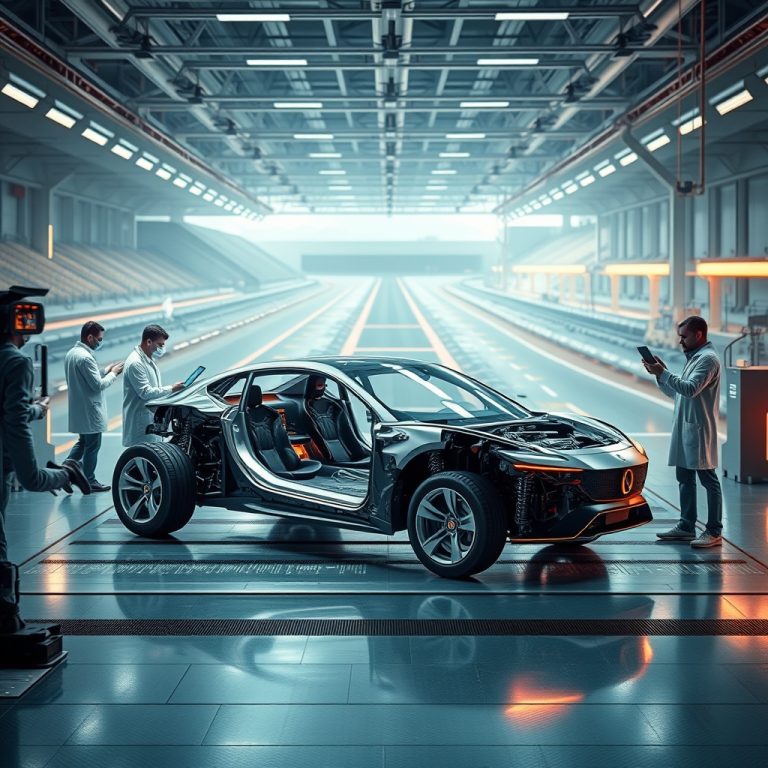

The modern automobile is a marvel of engineering, a symphony of precision components working in harmony to deliver performance, safety, and comfort. Yet, among the most critical yet often overlooked systems is the suspension—a complex network of springs, dampers, and linkages that bridges the gap between the road and the driver. Far from being a static assembly of parts, today’s suspension systems are dynamic, adaptive, and increasingly intelligent, transforming the way we experience driving.
The Evolution of Suspension: From Leaf Springs to Adaptive Intelligence
Suspension technology has come a long way since the days of rudimentary leaf springs and rigid axles. Early automotive suspensions were designed primarily to absorb the harshness of unpaved roads, with little consideration for handling or driver comfort. As roads improved and vehicles became faster, the demand for better ride quality and stability grew, leading to innovations like coil springs, independent suspension, and hydraulic shock absorbers.
By the mid-20th century, automotive engineers began experimenting with more sophisticated designs, such as MacPherson struts and multi-link suspensions, which allowed for greater control over wheel movement and vehicle dynamics. These systems laid the groundwork for the adaptive and active suspensions we see today, where real-time adjustments are made to optimize performance based on driving conditions.
The Rise of Adaptive and Active Suspensions
Modern suspension systems can be broadly categorized into three types: passive, adaptive, and active. Passive suspensions, the most common type, rely on fixed components like springs and dampers to manage road imperfections. While effective, they lack the ability to adjust to changing conditions, leaving drivers to compromise between comfort and handling.
Adaptive suspensions, on the other hand, use sensors and electronic controls to adjust damping rates in real time. By monitoring factors like road surface, vehicle speed, and driver inputs, these systems can soften the ride for comfort or stiffen it for improved cornering and stability. Brands like Mercedes-Benz with their AIRMATIC system and Audi with their adaptive air suspension have pioneered this technology, offering drivers a seamless blend of luxury and performance.
Active suspensions take this concept further by not just adjusting damping but also actively controlling the movement of the wheels. Using actuators, these systems can raise or lower the vehicle, counter body roll during cornering, and even prepare the suspension for an impending bump detected by forward-facing cameras. The result is a driving experience that feels almost telepathic, with the car anticipating and responding to the road ahead.
The Role of Electronics and AI in Modern Suspensions
The integration of electronics and artificial intelligence has been a game-changer for suspension technology. Modern systems rely on a network of sensors—accelerometers, gyroscopes, and even cameras—to gather data about the vehicle’s movement and the road surface. This data is processed by onboard computers, which make split-second decisions to adjust the suspension for optimal performance.
For example, Tesla’s adaptive suspension system uses cameras to scan the road ahead and preemptively adjust damping to smooth out rough patches. Similarly, Porsche’s PASM (Porsche Active Suspension Management) system continuously monitors driving conditions and adjusts damping forces to enhance both comfort and sportiness. These systems are not just reactive; they are predictive, using machine learning to improve their responses over time.
The Impact on Driving Dynamics
The benefits of advanced suspension systems extend beyond mere comfort. By maintaining optimal tire contact with the road, these systems enhance grip, reduce braking distances, and improve overall vehicle stability. In high-performance applications, active suspensions can even adjust the vehicle’s ride height to reduce aerodynamic drag at high speeds, further boosting efficiency and top-end performance.
For off-road enthusiasts, adaptive suspensions offer the ability to raise the vehicle’s ground clearance for rough terrain while lowering it for on-road driving. This versatility is exemplified by systems like Land Rover’s Adaptive Dynamics, which can switch between comfort, sport, and off-road modes at the touch of a button.
The Future: Suspensions in the Age of Autonomy
As vehicles become more autonomous, the role of suspension systems will continue to evolve. Self-driving cars will need to prioritize passenger comfort, as occupants may be less focused on the road and more sensitive to motion sickness. Advanced suspensions will play a crucial role in mitigating this by smoothing out acceleration, braking, and cornering forces.
Moreover, as electric vehicles (EVs) become more prevalent, suspension systems will need to adapt to the unique challenges posed by heavy battery packs and instant torque delivery. Lightweight materials and innovative designs will be essential to maintaining the balance between efficiency, performance, and comfort in EVs.
From the earliest leaf springs to today’s AI-driven adaptive systems, automotive suspensions have undergone a remarkable transformation. They are no longer just a means of absorbing bumps but a critical component in the pursuit of the perfect drive. As technology continues to advance, the line between comfort and performance will blur even further, making every journey smoother, safer, and more enjoyable. The road ahead is not just about where we’re going, but how we get there—and the suspension is the unsung hero making it all possible.
About the Author