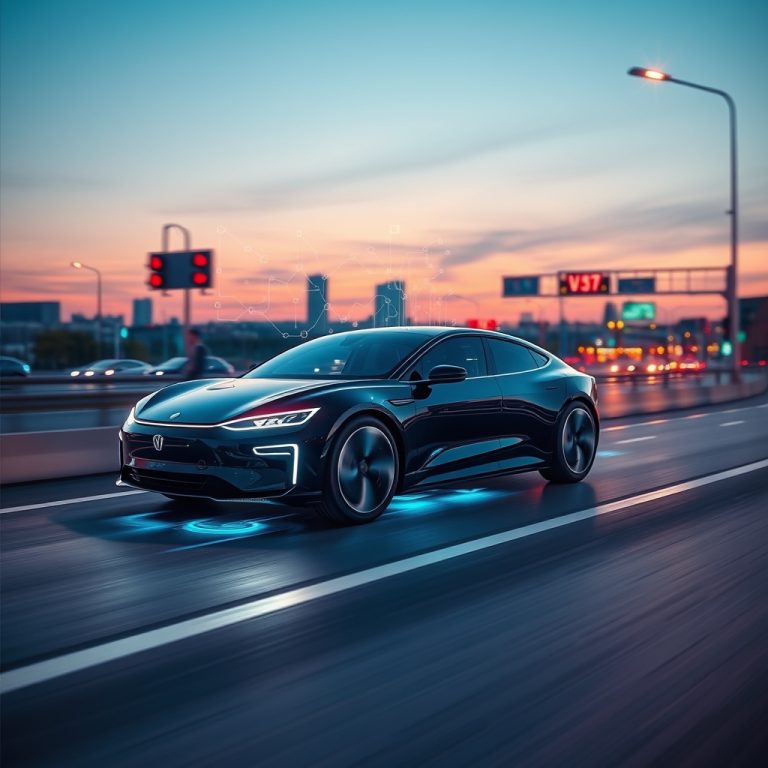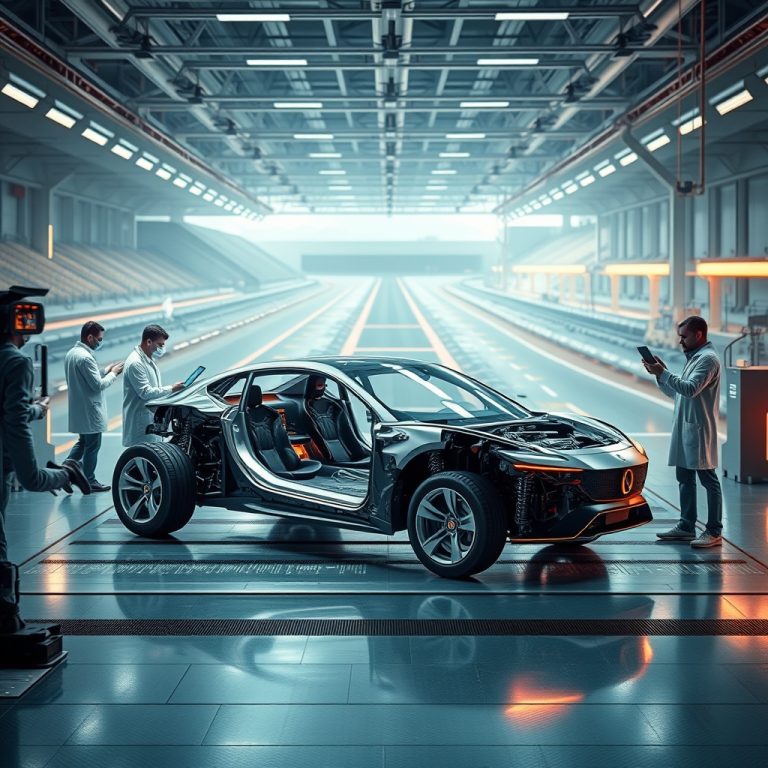

The world of automobiles is undergoing a metamorphosis—a stunning evolution not seen since the invention of the combustion engine. We stand at the edge of a technological frontier where silicon meets steel, and artificial intelligence collides with combustion to forge vehicles that are smarter, cleaner, and more autonomous than ever imagined. The future of automotive tech isn’t just promising—it’s jaw-droppingly transformative.
From self-driving marvels to emotion-detecting dashboards, what’s coming next is a symphony of innovation that will redefine how we move, connect, and experience the road.
Chapter One: The Autonomous Age Has Arrived
The driver’s seat is about to become the passenger’s lounge. Autonomous vehicles are no longer speculative blueprints—they are real, evolving entities navigating city streets and highways with minimal human input.
Advanced Driver-Assistance Systems (ADAS) are already laying the groundwork. With features like adaptive cruise control, lane-keeping assistance, and automatic emergency braking, the path toward full autonomy is paved with microdecisions made by neural networks trained to think like human drivers—only faster and safer.
Level 5 autonomy, the zenith of self-driving technology, will soon eliminate the steering wheel altogether. These machines will interpret real-world data in milliseconds—rain, road debris, erratic drivers—while their passengers relax, work, or stream their favorite shows. The future of automotive tech is not simply about hands-free driving. It’s about reclaiming time, reducing accidents, and reimagining mobility as a luxury experience.
Chapter Two: Electrification Beyond Imagination
Electric vehicles (EVs) are no longer fringe novelties—they’re rapidly becoming the gold standard. But we’ve only scratched the surface. Today’s EVs boast ranges over 500 miles, and tomorrow’s promise even more with breakthrough battery chemistries.
Solid-state batteries, the heir apparent to lithium-ion, offer greater energy density, faster charging, and reduced risk of thermal runaway. Imagine charging your car in less than 10 minutes and driving from New York to Washington, D.C., on a single charge. That’s not science fiction—it’s the tangible future of automotive tech.
Beyond batteries, solar integration and wireless charging roads are also in development. Picture a highway embedded with inductive coils that charge your EV as you cruise. This isn’t a distant dream—pilots are underway in countries like Sweden and Israel.
Chapter Three: Hyperconnected Vehicles
In the near future, your car won’t just connect to your phone—it will communicate with other vehicles, traffic lights, and even the pavement beneath its tires. Vehicle-to-Everything (V2X) technology will revolutionize the way cars interact with the world.
Traffic accidents will decline as vehicles share real-time hazard data. Congestion will ease as cars coordinate with urban infrastructure. Your vehicle will warn you of icy patches or traffic jams miles ahead. This hyperconnectivity is the invisible neural web powering the future of automotive tech.
Moreover, over-the-air (OTA) updates will continuously enhance your car’s performance, security, and even add new features—just like a smartphone. Expect infotainment systems to evolve into AI-driven personal concierges that learn your preferences and adapt routes, music, or temperature settings accordingly.
Chapter Four: AI at the Wheel
Artificial Intelligence is the invisible hand guiding the transformation of automobiles from mechanical beasts to intuitive machines. Deep learning algorithms are training vehicles to recognize patterns, anticipate events, and make split-second decisions.
But AI’s influence goes beyond the road. It will personalize your driving experience, detect driver fatigue, adjust seating posture, and even monitor your health. Steering wheels embedded with biometric sensors will track heart rate and stress levels, while AI interprets these metrics to suggest breaks or adjust ambient lighting.
In the future of automotive tech, the car becomes a co-pilot, guardian, and health monitor—ensuring that every journey is safer, more efficient, and surprisingly human.
Chapter Five: Sustainable Design and Manufacturing
The next revolution isn’t just digital—it’s ecological. Automakers are pivoting from petroleum-soaked production lines to sustainable ecosystems.
Recyclable materials, carbon-neutral factories, and 3D-printed parts made from hemp-based bioplastics are becoming the norm. Companies like BMW and Tesla are leading the charge, reducing environmental footprints without compromising performance.
Furthermore, the supply chain is undergoing a green renaissance. Ethical mining of rare earth materials, battery recycling initiatives, and localized production will anchor the next wave of sustainable mobility. The future of automotive tech will not only preserve the planet—it will restore it.
Chapter Six: Augmented Reality Dashboards
Forget the traditional speedometer. Tomorrow’s dashboards will be immersive interfaces powered by augmented reality (AR). Navigation directions will appear directly on the windshield, overlaying real-world landmarks with digital cues.
Heads-Up Displays (HUDs) will no longer be the domain of fighter jets—they’ll become standard in midrange and luxury vehicles alike. These systems will highlight pedestrians, identify road signs, and guide drivers with intuitive visuals that eliminate distractions.
The future of automotive tech fuses reality with data in a seamless visual narrative—keeping drivers informed without overwhelming their senses.
Chapter Seven: Personalized In-Car Experience
Gone are the days of static seat settings and preset radio stations. AI-driven personalization will redefine what “my car” really means.
Facial recognition will unlock the car and load your personal profile—adjusting seats, mirrors, ambient lighting, and even preferred playlists. Machine learning will track your behavior and suggest departure times based on traffic patterns, calendar events, or even your sleeping habits.
In this personalized automotive utopia, the cabin becomes a responsive sanctuary. Aromatherapy diffusers, mood lighting, and AI-curated entertainment transform every trip into a bespoke experience. That’s the immersive potential behind the future of automotive tech.
Chapter Eight: Flying Cars and Urban Air Mobility
Hovering vehicles may seem like the fever dream of retro sci-fi films, but vertical takeoff and landing (VTOL) aircraft are rapidly becoming a reality.
Urban air mobility (UAM) startups are engineering compact aerial vehicles aimed at alleviating city congestion. These electric-powered flyers will shuttle passengers above the gridlock in quiet, autonomous pods.
While regulatory and infrastructural hurdles remain, companies like Joby Aviation, Volocopter, and Hyundai’s Supernal are laying the groundwork. Soon, we may hail airborne rideshares the same way we summon ground-based Ubers today.
The future of automotive tech might not be bound by roads at all.
Chapter Nine: Advanced Safety Systems
Safety is evolving from reactive measures to proactive intelligence. Advanced sensors, LIDAR systems, radar, and thermal imaging are the new seatbelts and airbags.
Next-gen vehicles will predict collisions and reroute themselves preemptively. AI will scan facial expressions to detect distraction or intoxication. And in emergencies, your car will automatically contact emergency services, sharing your precise location and health metrics.
Some models are already deploying external airbags to protect pedestrians—essentially wrapping the car in a digital cocoon of safety. As we hurtle into the future of automotive tech, safety becomes anticipatory, intelligent, and comprehensive.
Chapter Ten: The Subscription-Based Car
Ownership is becoming optional. Subscription models are turning cars into services rather than assets.
With a monthly fee, users can access fleets of vehicles tailored to specific needs—SUVs for road trips, compacts for urban commutes, luxury sedans for client meetings. Insurance, maintenance, and taxes are bundled into one digital interface.
This mobility-as-a-service (MaaS) approach liberates users from ownership burdens while offering unprecedented flexibility. For a generation raised on Netflix and Spotify, this evolution feels both inevitable and exhilarating.
It’s a radical reshaping of the economic paradigm underlying the future of automotive tech.
Chapter Eleven: Blockchain in Mobility
Data integrity and transactional trust will be key in connected mobility. Enter blockchain—a decentralized ledger technology poised to revolutionize automotive ecosystems.
From verifying ride history in used vehicles to automating toll payments and securing over-the-air updates, blockchain enables transparency and trust at scale.
In a future filled with autonomous ride-sharing and AI-driven service logistics, the future of automotive tech will rely on incorruptible digital ledgers to keep everything honest, efficient, and secure.
Chapter Twelve: Biometric Car Control
Imagine starting your car with a fingerprint. Or adjusting settings with your gaze. Biometric authentication is entering the driver’s cockpit, transforming how we interact with vehicles.
Voice recognition will replace key fobs. Retina scanners may become standard in high-security fleets. Heartbeat recognition—already explored in wearable tech—could serve as the ultimate anti-theft system.
This high-tech intimacy not only enhances convenience but makes your vehicle as secure as a bank vault. It’s yet another signal of the hyper-personalized future of automotive tech.
Chapter Thirteen: Quantum Computing and Predictive Navigation
Quantum computing, though in its infancy, could supercharge traffic forecasting and route optimization. By processing complex variables far beyond classical capabilities, quantum algorithms can chart routes that consider weather, congestion, construction, and even micro-events like parades or protests.
This real-time predictive routing will save time, fuel, and emissions—redefining what it means to “drive smart.”
As quantum technology matures, it will seamlessly integrate into the evolving future of automotive tech, making vehicles not just connected but omniscient.
We are witnessing a paradigm shift that transcends mechanical improvements. This isn’t just about faster cars, or even smarter ones—it’s about building a dynamic ecosystem where intelligence, efficiency, sustainability, and human-centric design converge.
The future of automotive tech will not be defined by gadgets or horsepower. It will be measured by how seamlessly vehicles integrate into our lives, how sustainably they tread upon the earth, and how thoughtfully they prioritize safety, personalization, and autonomy.
This future is not waiting on the horizon. It’s approaching at full throttle, engine humming, data streaming, and possibilities—limitless.
Buckle up. The ride ahead will blow your mind.
About the Author